I still remember the first time a video game genuinely surprised me. It was 2015, and I was deep into a stealth mission in “Metal Gear Solid V: The Phantom Pain.” After successfully headshotting guards from a distance for hours, something changed. Enemies started wearing helmets. My usual strategy suddenly became useless.
That moment stuck with me. The game had learned my patterns and adapted. It wasn’t just following scripts anymore—it was responding to how I played.
What Exactly Is Adaptive AI?
Adaptive AI refers to artificial intelligence systems in games that modify their behavior based on player actions, skill levels, and decision patterns. Unlike traditional game AI, which follows predetermined rules and scripted responses, adaptive systems observe, learn, and evolve throughout your playthrough.
Think of it like playing chess against someone who remembers your favorite openings and adjusts their strategy accordingly. Except this opponent never forgets and gets smarter with every match.
The technology behind adaptive AI typically involves machine learning algorithms, behavioral analysis, and dynamic difficulty adjustment systems working together. Some games use rubber-banding techniques where the AI’s performance scales based on your success rate while others employ more sophisticated neural networks that genuinely learn player tendencies.
How Adaptive AI Actually Works
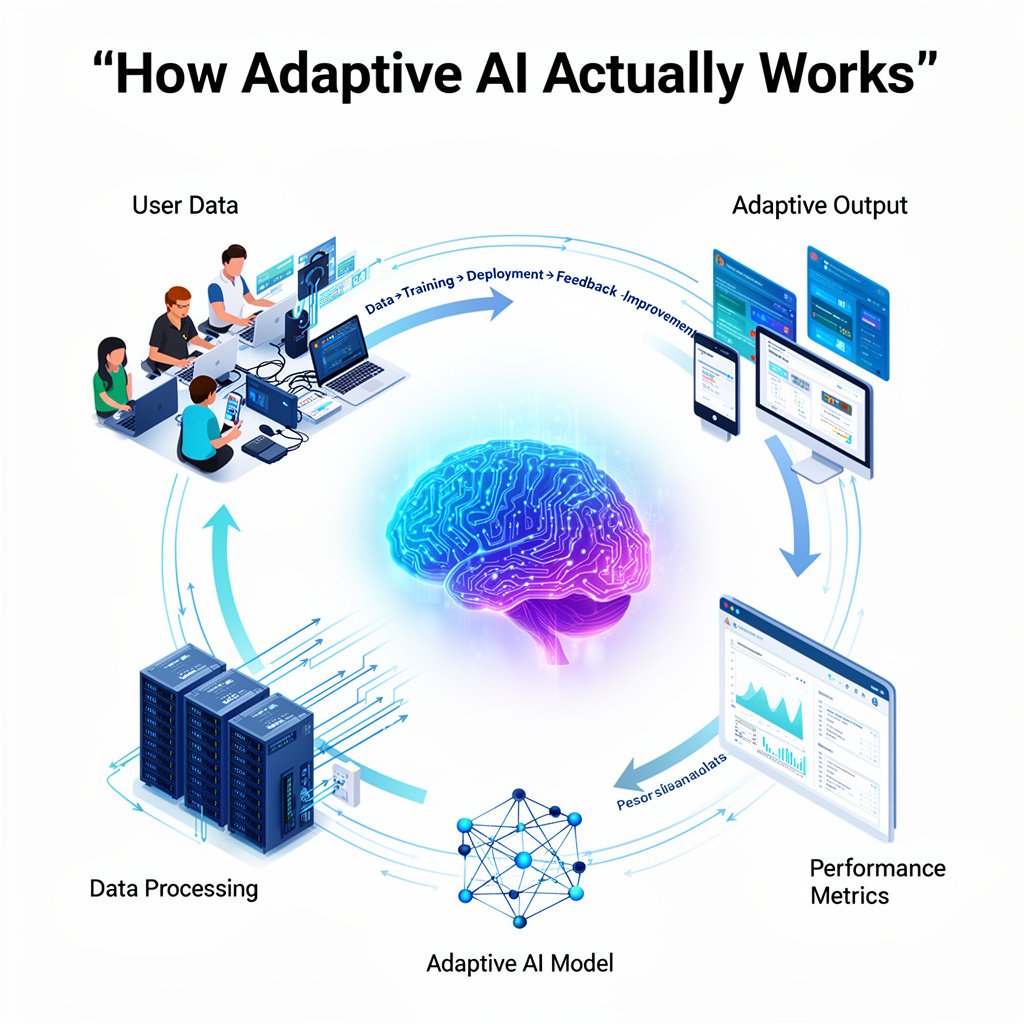
From my experience reviewing game design documentation and speaking with developers over the years, adaptive AI systems generally operate on three levels.
Reactive Adaptation happens in real time. The game monitors immediate player actions and adjusts enemy behavior on the fly. If you’re landing every shot, enemies might take cover more frequently or become more aggressive to close distances.
Session-Based Learning tracks patterns across a single play session. Racing games like “Mario Kart” use this extensively though Nintendo doesn’t officially call it adaptive AI. Fall behind consistently, and you’ll notice item drops becoming slightly more favorable.
Long-Term Behavioral Modeling is where things get interesting. Games like “Left 4 Dead” feature the famous “AI Director,” which monitors player performance across entire campaigns. It doesn’t just adjust difficulty; it orchestrates pacing, tension, and even resource placement based on accumulated data about how your group plays together.
Real Examples That Changed Gaming
Several titles have pioneered adaptive AI in remarkable ways.
Alien: Isolation (2014) deserves special mention. The xenomorph in this game operates on a two-brain system. One brain knows exactly where you are. The other receives hints from the first but must actively hunt you down. The hunting brain learns from your hiding spots and strategies. Use lockers too often, and the alien starts checking them regularly. Overuse the flamethrower, and it becomes bolder against fire threats.
Middle-earth: Shadow of Mordor (2014) introduced the Nemesis System, which I consider one of the most innovative adaptive systems ever created. Orcs remember their encounters with you. Kill one with fire? His surviving comrades might develop fire resistance. Escape a captain? He’ll mock you during your next meeting, complete with personalized dialogue referencing your failure.
F.E.A.R. (2005) may seem dated now, but its enemy AI remains impressive. Soldiers flanked, communicated, and responded to your tactics with surprising realism. The system analyzed cover positions, predicted player movement, and coordinated squad responses dynamically.
The Benefits and Drawbacks
Adaptive AI dramatically extends replay value. When enemies respond differently each playthrough, games feel fresh longer. It creates personalized experiences without developers needing to hand-craft every scenario.
However, there’s a fine line between challenging and frustrating. Poorly implemented adaptive AI can feel punishing. I’ve abandoned games where the rubber-banding felt cheap rather than fair. When the system overcorrects, skilled players feel cheated out of earned advantages.
Balance is genuinely difficult to achieve. Developers must consider casual players who want relaxing experiences alongside hardcore gamers seeking brutal challenges. Dynamic difficulty systems can sometimes homogenize the experience, making every player’s journey feel similar despite different skill levels.
There’s also the computational cost. Complex adaptive systems require significant processing power, which explains why many mobile and indie games stick with simpler AI approaches.
Where We’re Headed
Current trends suggest adaptive AI will become standard rather than exceptional. Cloud computing enables more sophisticated learning without taxing local hardware. Some developers are experimenting with AI systems that learn from entire player communities, not just individuals.
Procedural content generation combined with adaptive AI opens fascinating possibilities. Imagine dungeons that not only generate randomly but populate with enemies specifically designed to counter your established playstyle.
The ethical considerations matter too. Games collecting behavioral data raise privacy questions. How much should a game know about you? Where does that data go? These questions will become increasingly important as adaptive systems grow more sophisticated.
Final Thoughts
After nearly two decades of gaming and observing industry evolution, adaptive AI represents one of the most exciting developments in interactive entertainment. It transforms games from static puzzles into living systems that grow alongside players.
The best implementations feel invisible. You shouldn’t notice the AI adapting—you should simply feel that the game is alive, responsive, and genuinely challenging. When done right, adaptive AI creates stories unique to each player, memorable moments that couldn’t exist with scripted systems.
The technology isn’t perfect yet. But every year brings improvements, and the gap between static scripts and truly intelligent opponents continues to shrink.
FAQs
What is adaptive AI in gaming?
Adaptive AI refers to game systems that modify enemy behavior, difficulty, and responses based on how individual players perform and make decisions.
Which games have the best adaptive AI?
Alien: Isolation, Left 4 Dead series, Middle-earth: Shadow of Mordor, and F.E.A.R. are frequently cited as having exceptional adaptive AI systems.
Does adaptive AI make games harder?
Not necessarily. It adjusts difficulty in both directions, sometimes making games easier for struggling players and harder for skilled ones.
Is adaptive AI the same as dynamic difficulty?
Dynamic difficulty is one component of adaptive AI. Full adaptive systems also modify enemy tactics, behaviors, and game world elements beyond just difficulty scaling.
Do all modern games use adaptive AI?
No. Many games still rely on traditional scripted AI due to development costs, complexity, and design choices prioritizing predictable experiences.
Can adaptive AI learn permanently from players?
Some systems retain learned behaviors across sessions, while others reset after each playthrough. Implementation varies significantly between games.