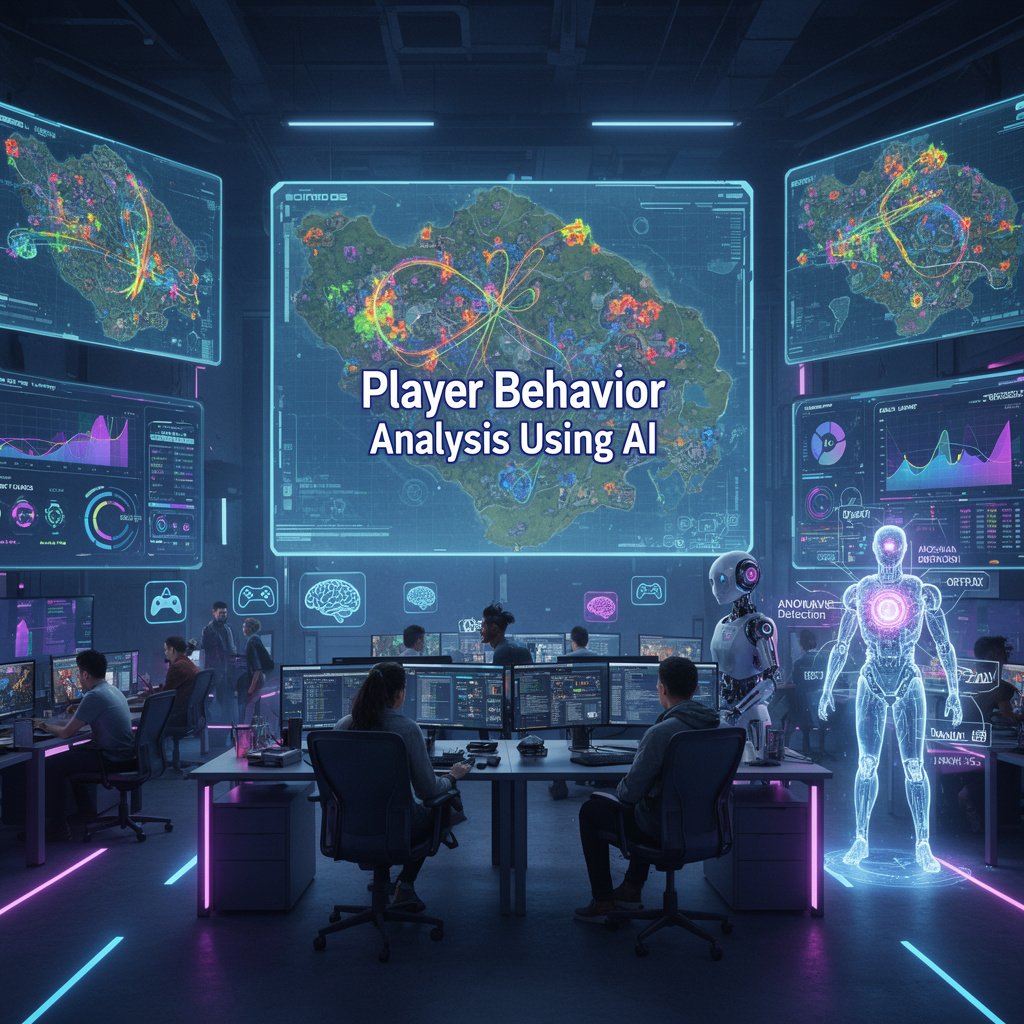
I still remember sitting in a conference room back in 2019, watching a data scientist explain how their studio predicted player churn with 87% accuracy three days before players actually quit. That presentation changed how I thought about gaming analytics forever. The intersection of artificial intelligence and player behavior has become one of the most fascinating and occasionally controversial developments in the gaming industry.
Understanding What Player Behavior Analysis Really Means
Before diving into the technical stuff, let’s break down what we’re actually talking about here. Player behavior analysis involves collecting, processing, and interpreting data about how gamers interact with games. This includes everything from how long someone plays, which levels they struggle with, when they make purchases, and even how they move their mouse cursor.
Traditional analytics gave us basic metrics. Session lengths, login frequencies, completion rates. Useful? Sure. But they only scratched the surface. What studios really wanted to know was why players did what they did and what they’d do next.
That’s where intelligent algorithms entered the picture.
The AI Revolution in Gaming Analytics

Modern machine learning models can process millions of player actions simultaneously, identifying patterns that would take human analysts months to uncover. These systems don’t just count clicks, they understand context, predict outcomes, and continuously improve their accuracy.
Take Electronic Arts, for example. Their internal analytics platform processes over 50 terabytes of player data daily across their game portfolio. Their models can identify when a player is about to become frustrated with a difficulty spike before they even reach that point in the game.
Riot Games, the studio behind League of Legends, uses behavioral analysis to tackle toxicity. Their system analyzes chat patterns, ping usage, and gameplay indicators to identify disruptive players. According to their published research, this approach reduced negative behaviors by approximately 40% in matched games.
Practical Applications That Actually Work
Dynamic Difficulty Adjustment
One of the most player-friendly applications involves adjusting game difficulty in real-time. Left 4 Dead pioneered this with their “AI Director,” but contemporary implementations are far more sophisticated. The system monitors stress indicators deaths, resource usage, time spent on sections and subtly tweaks enemy spawns, loot drops, or puzzle complexity.
I spoke with a game designer last year who explained how their mobile puzzle game increased 30-day retention by 23% simply by identifying the exact moments players felt overwhelmed and offering contextual hints.
Fraud and Cheating Detection
Cheating ruins competitive gaming. Period. Traditional anti-cheat solutions relied on signature detection, finding known cheat software. Smart behavioral analysis flips this approach entirely. Instead of looking for cheats, these systems learn what normal playing looks like for each skill bracket.
When someone suddenly starts hitting 94% headshots after six months of 31% accuracy, the system flags that behavioral anomaly. PUBG Corporation reported banning millions of accounts using this methodology, with significantly fewer false positives than previous methods.
Personalized Monetization (The Controversial Part)
Here’s where things get ethically murky. Many free-to-play games use behavioral models to optimize when and how they present purchase opportunities. Some studios have faced criticism for targeting players identified as “whales,” high spenders, with increasingly aggressive offers.
I won’t pretend this isn’t happening, because it absolutely is. The same technology that can improve player experience can also be weaponized to exploit psychological vulnerabilities. Responsible studios set clear ethical boundaries around these applications, but industry-wide standards remain inconsistent.
Benefits Beyond the Bottom Line
While revenue optimization gets the headlines, player behavior analysis genuinely improves games in meaningful ways:
Bug Detection: Unusual player movements or repeated deaths in specific locations can automatically flag potential bugs for QA teams.
Content Prioritization: Understanding which features players actually engage with helps developers allocate resources more effectively.
Community Health: Identifying and addressing toxic behavior creates healthier gaming environments for everyone.
Accessibility Improvements: Analyzing how players with different abilities interact with games leads to more inclusive design choices.
Limitations Worth Acknowledging
No analysis system is perfect. Models trained on historical data can perpetuate existing biases. A difficulty system calibrated primarily on data from hardcore players might not serve casual audiences well.
Privacy concerns are legitimate. Players increasingly question what data games collect and how it’s used. The European GDPR and similar regulations have forced studios to be more transparent, but gaps remain.
There’s also the cold start problem. New players have no behavioral history, making predictions unreliable until sufficient data accumulates. Some studios address this with optional surveys or by analyzing early session indicators.
Where This Is Heading
The next frontier involves emotional analysis using gameplay patterns, biometric data from controllers, and even voice analysis to understand player emotional states. Imagine a horror game that knows when you’re genuinely scared versus when you’re bored.
Cloud gaming platforms add another dimension. With all gameplay happening on remote servers, every input can potentially be analyzed without client-side detection concerns.
Cross-game behavioral profiles are emerging too. Publishers with large portfolios are building unified player profiles that follow individuals across different titles, enabling personalization before you’ve even played their new release.
Final Thoughts
Having watched this field evolve over the past decade, I’m genuinely impressed by the positive applications while remaining concerned about potential abuses. The technology itself is neutral it’s how studios choose to deploy it that matters.
The best implementations put player experience first, using behavioral insights to create better games rather than simply extract more money. As players become more aware of these practices, I expect demand for transparency will increase, hopefully pushing the industry toward more ethical standards.
Smart player behavior analysis, done responsibly, represents a genuine advancement in game design. The challenge is ensuring the gaming industry earns and maintains player trust while leveraging these powerful capabilities.
Frequently Asked Questions
What data do games typically collect for behavior analysis?
Games commonly collect session duration, in-game actions, purchase history, social interactions, progression patterns, and device/platform information.
Can players opt out of behavioral tracking?
Many games offer limited opt-out options for non-essential tracking, though core analytics often remain tied to game functionality. Check individual game privacy policies.
Does player behavior analysis work in single-player games?
Absolutely. Many single-player titles use behavioral data to improve difficulty balancing, identify bugs, and inform sequel development decisions.
How accurate are AI predictions about player behavior?
Accuracy varies significantly by application. Churn prediction models typically achieve 75-90% accuracy, while emotion detection remains considerably less reliable.
Is my gaming behavior being sold to third parties?
This depends entirely on the publisher’s privacy policy. Major studios generally retain data internally, but some smaller developers or platforms may share aggregated data with partners.
Can behavioral analysis detect when I’m about to quit a game?
Yes, modern systems can identify pre churn indicators with reasonable accuracy, often triggering retention interventions like special offers or difficulty adjustments.