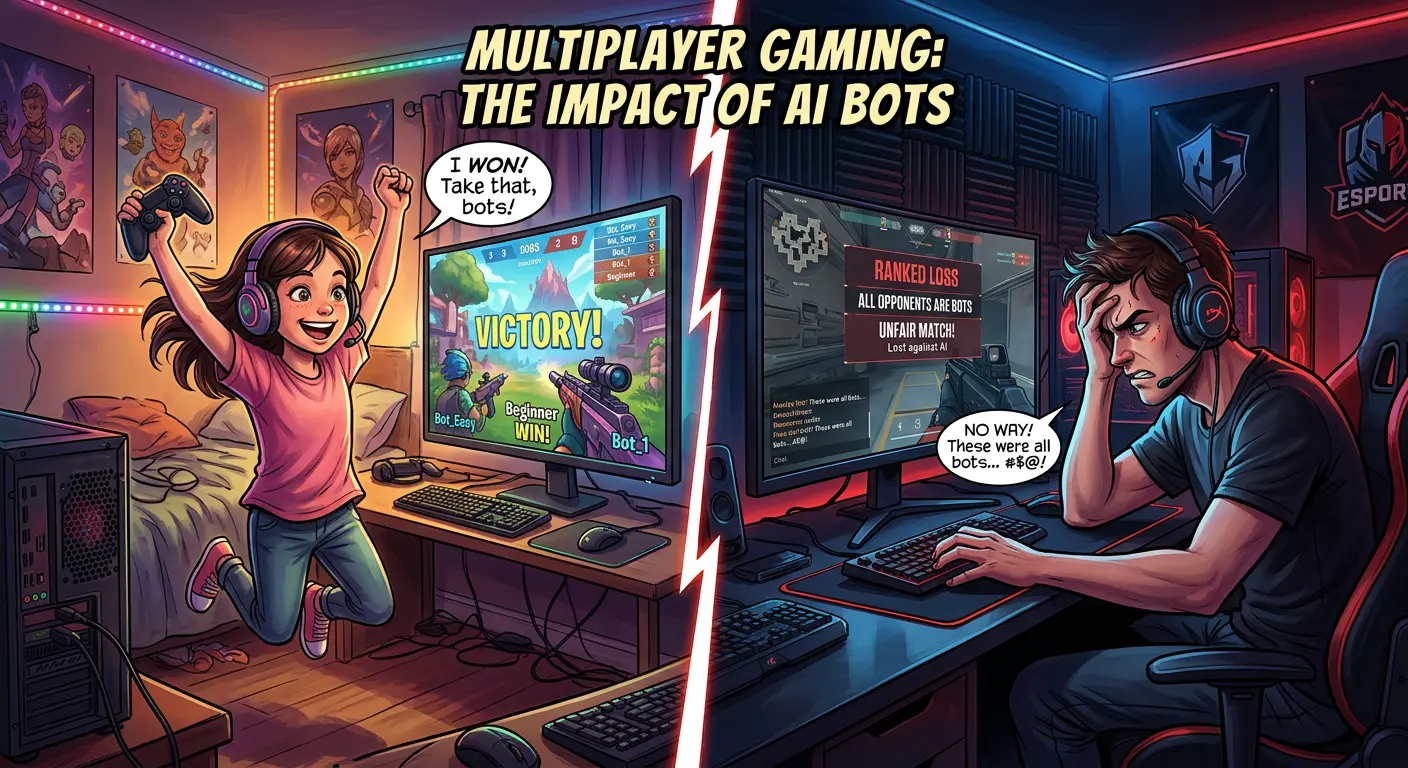
I still remember the first time I noticed something was off during a match of PlayerUnknown’s Battlegrounds back in 2018. My squad had eliminated what felt like an unusual number of opponents who moved predictably, aimed poorly, and seemed completely oblivious to basic survival tactics. It wasn’t until a friend mentioned “bot lobbies” that everything clicked. Those weren’t inexperienced players they were artificial intelligence entities designed to populate the game world.
That experience sparked my fascination with how AI bots have become integral to multiplayer gaming. After spending over a decade covering the gaming industry and countless hours playing competitive titles, I’ve watched this technology evolve from simple placeholder entities into sophisticated virtual opponents that can sometimes fool even veteran players.
What Exactly Are AI Bots in Multiplayer Games?
At their core, AI bots are computer controlled characters programmed to simulate human player behavior in online multiplayer environments. They’ve existed in gaming since the early days of first-person shooters like Quake and Unreal Tournament, where they served as practice dummies for players wanting to hone their skills offline.
Today’s multiplayer bots are something entirely different. Games like Fortnite, Call of Duty: Warzone, and Apex Legends deploy them strategically to address player matchmaking challenges, reduce wait times, and create more accessible entry points for newcomers.
The technology powering these bots has grown remarkably sophisticated. Modern implementations use behavior trees, neural networks, and machine learning algorithms that analyze actual player data to create more convincing artificial opponents. Some bots now exhibit surprisingly human-like behaviors – they hesitate before shooting, miss occasionally, and even perform tactical maneuvers that wouldn’t look out of place in mid-level ranked play.
Why Developers Are Embracing Bot Integration
The decision to include bots in multiplayer games stems from practical necessity as much as design philosophy. Player population management remains one of the biggest headaches for online game developers. Nothing kills a multiplayer title faster than long queue times or lopsided matches.
When PUBG Mobile launched its aggressive bot strategy, the results were telling. New players experienced shorter wait times and won matches more frequently during their initial sessions. Retention rates climbed because beginners weren’t getting demolished by experienced players within the first thirty seconds of landing.
Epic Games took similar approaches with Fortnite, particularly after the game’s initial popularity surge began stabilizing. By quietly introducing bots into public matches, they maintained the feeling of full, active lobbies while ensuring newer players had achievable victories that kept them engaged.
From a pure business perspective, this makes sense. A player who wins occasionally sticks around longer than someone who consistently finishes at the bottom of the leaderboard. Bots provide that psychological cushion without requiring developers to fracture their player base across too many skill brackets.
The Double Edged Sword of Artificial Opponents
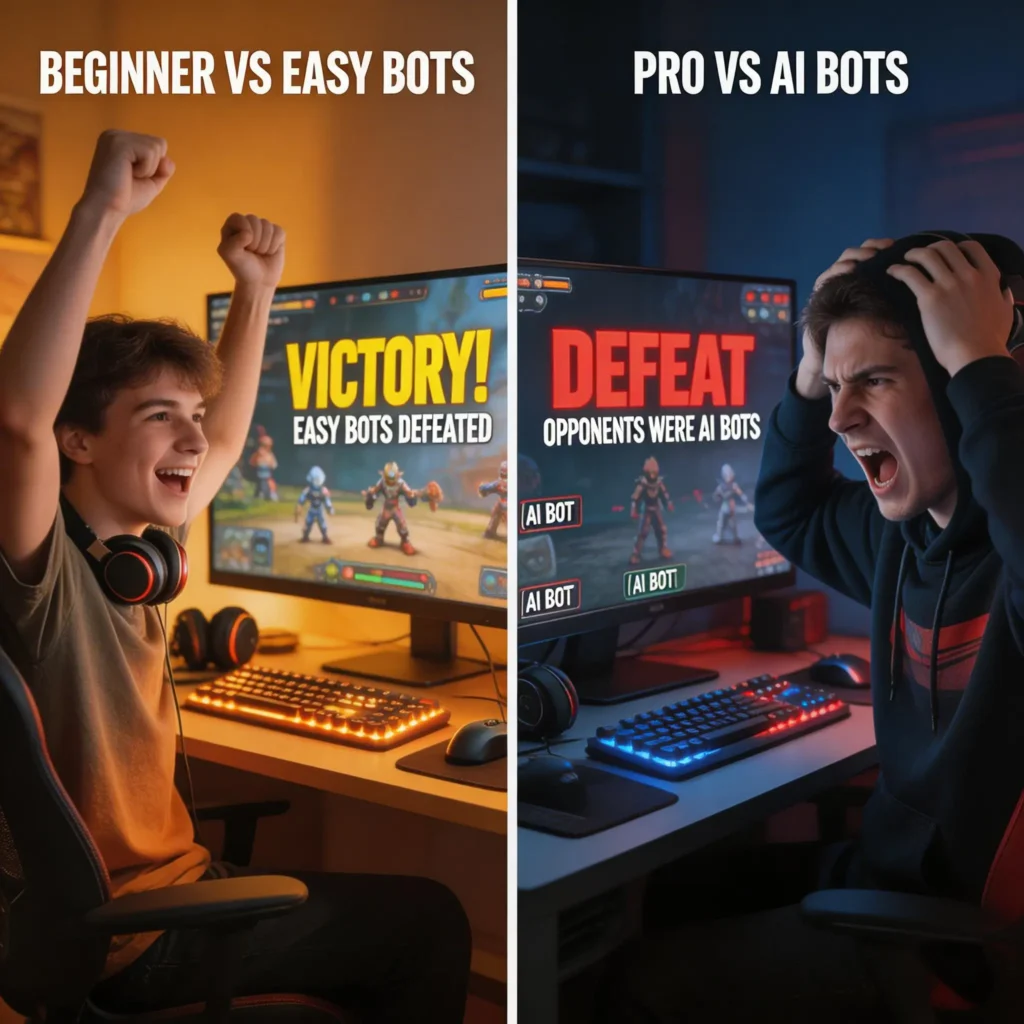
Here’s where things get complicated. While bots solve legitimate matchmaking problems, they’ve also created unexpected consequences that the gaming community remains divided on.
Hardcore players often feel cheated when they discover their impressive kill counts came partly from fighting artificial opponents. There’s something hollow about bragging rights when half your eliminations were essentially target practice. I’ve spoken with competitive players who describe bot-heavy lobbies as “empty calories” – temporarily satisfying but ultimately unsatisfying.
The transparency issue particularly bothers many players. Most games don’t explicitly announce when bots are present, leaving players guessing about the authenticity of their opponents. This lack of clarity has bred distrust and spawned countless Reddit threads where players share methods for identifying bot behavior.
On the flip side, casual players often appreciate bots without even knowing they’re there. My own experience teaching my younger cousin to play Fortnite was dramatically improved because she could actually get eliminations and feel successful. That positive reinforcement matters, especially for games trying to attract broader audiences.
Ethical Considerations and Industry Accountability
The gaming industry faces legitimate ethical questions about bot implementation. When players purchase cosmetic items or battle passes partly motivated by their perceived skill and success in matches, are they being misled if those achievements came against artificial opponents?
Some developers have moved toward greater transparency. Call of Duty now marks bot kills differently in certain modes, and several mobile games explicitly state when bots are used to fill lobbies. This honest approach respects player intelligence while still maintaining the practical benefits bots provide.
There’s also the competitive integrity angle. Esports organizations and ranked systems must ensure bots never infiltrate serious competitive environments. The consequences of artificial opponents in ranked matches would undermine the entire foundation of competitive gaming credibility.
Looking Ahead: The Future of Gaming Bots
The trajectory points toward smarter, more convincing bot technology. Game developers are investing heavily in machine learning systems that can mimic human play patterns with increasing accuracy. Future bots might adapt their behavior based on individual player tendencies, providing customized challenges that feel genuinely competitive.
Virtual reality multiplayer games present interesting opportunities for bot development. Creating believable virtual opponents in immersive 3D environments requires solving problems around spatial awareness, realistic movement, and convincing body language that flat-screen games don’t face.
The key challenge moving forward involves balancing accessibility with authenticity. Players deserve both welcoming environments for learning and genuine competitive experiences when they’re ready. Smart bot implementation can provide both, but only when developers approach this technology thoughtfully and transparently.
Final Thoughts
AI bots in multiplayer games represent neither a pure blessing nor a curse. They’re tools that, when deployed responsibly, can enhance the gaming experience for millions of players while solving real technical and matchmaking challenges. The gaming community’s ongoing conversation about bots reflects broader questions about authenticity, transparency, and what we really want from our online gaming experiences.
As someone who’s experienced both sides – the satisfaction of genuinely outplaying skilled opponents and the hollow feeling of dominating obvious bots – I believe the ideal future involves honest communication from developers and smarter implementation that serves all player types without deceiving any of them.
Frequently Asked Questions
How can I tell if I’m playing against bots in multiplayer games?
Watch for repetitive movement patterns, poor decision-making, generic usernames, and inconsistent aiming. Bots often move in predictable paths and rarely use advanced tactics.
Do all battle royale games use bots?
Most major battle royale titles now incorporate bots to varying degrees, particularly in casual modes and for newer players. The percentage typically decreases as your skill rating improves.
Can bots help me improve at competitive games?
Bots provide useful target practice for mechanics and movement but don’t replicate the unpredictability of human opponents. They’re best used as warmup tools rather than primary training partners.
Are bot kills tracked differently in statistics?
This varies by game. Some titles separate bot and player eliminations in detailed stats, while others combine them without distinction.
Why don’t developers just tell players when bots are present?
Transparency varies by company philosophy. Some developers fear that explicit bot announcements would discourage players or make victories feel less meaningful.