
You know that feeling when Steam suggests a game that becomes your next 200 hour obsession? Or when Xbox Game Pass somehow knows you’d love that indie platformer you’d never heard of? That’s AI recommendation systems at work, and they’ve completely changed how we discover games.
I’ve spent years watching these systems evolve from basic “customers who bought this also bought” lists to sophisticated engines that actually understand player preferences. The transformation has been remarkable, though not without its complications.
How Game Recommendation Systems Actually Work
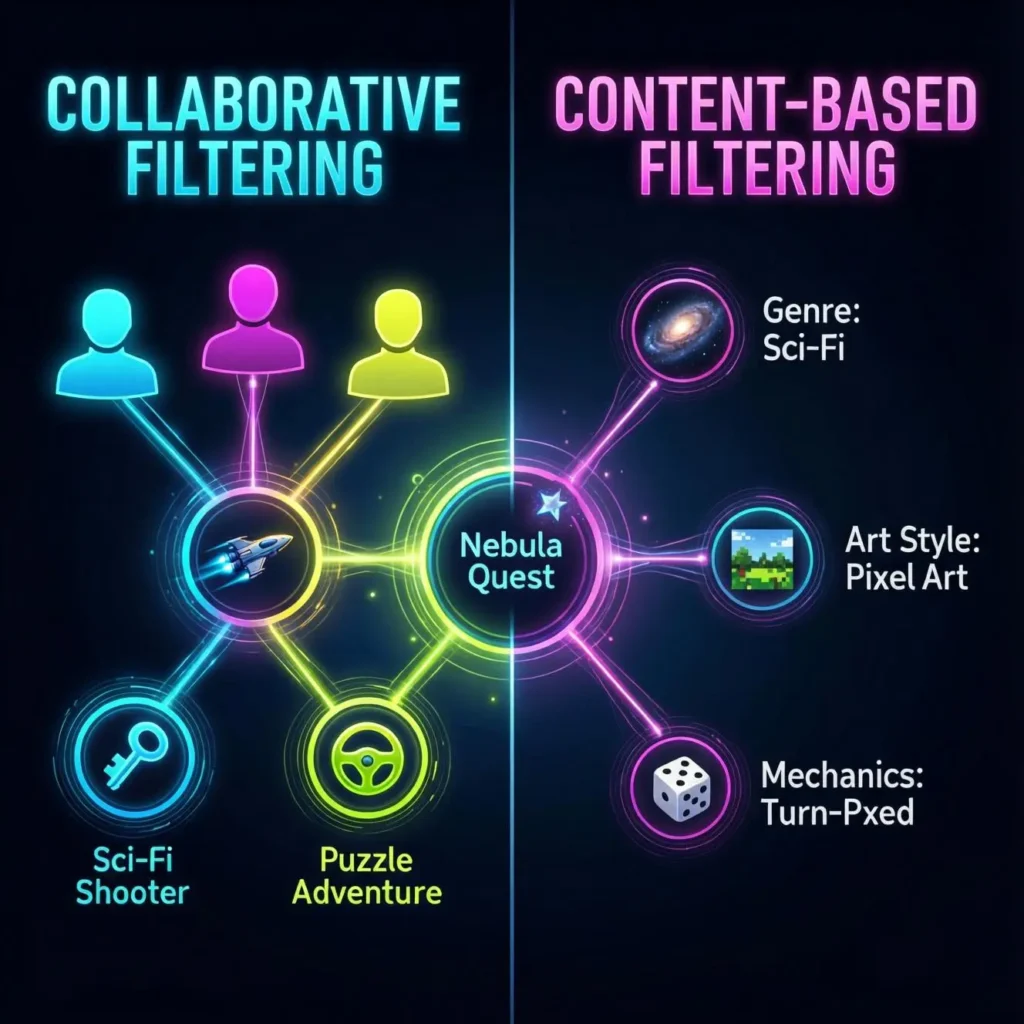
At their core, game recommendation systems analyze patterns. But we’re not talking about simple patterns anymore. Modern systems pull from multiple data sources: your play history, how long you spent in each game, whether you finished it, your achievement completion rate, games you’ve wishlisted, reviews you’ve written, and even what your friends play.
The two main approaches are collaborative filtering and content based filtering. Collaborative filtering essentially says, “Players similar to you enjoyed these games.” It’s the reason why if you and I both loved Hollow Knight, Celeste, and Dead Cells, the system might recommend Blasphemous to both of us. Content based filtering, on the other hand, examines the actual characteristics of games you like genres, mechanics, art styles, themes and finds similar matches.
Most platforms now use hybrid systems that combine both approaches. Steam’s recommendation engine, for instance, doesn’t just look at what similar players bought. It examines tags, gameplay features, developer patterns, and even the text of reviews to understand why players liked certain games.
Real-World Examples That Get It Right (And Wrong)

Netflix gets credit for popularizing recommendation algorithms in entertainment, but gaming platforms have taken this further because of one crucial difference: engagement data. When you play a game for 100 hours versus 2 hours, that’s incredibly valuable signal data.
Steam’s Discovery Queue has become surprisingly good at surfacing hidden gems. I’ve found several smaller titles through it that I never would’ve discovered through traditional browsing. The system learns from your queue interactions games you skip, add to your wishlist, or click through to learn more. Over time, it builds a surprisingly accurate profile.
Epic Games Store has been playing catch up in this department, which partially explains why their weekly free games strategy is so important to them. They need that user data to build effective recommendations. Their system is improving but still feels less refined than Steam’s decade-plus of gathered intelligence.
Console platforms have their own approaches. PlayStation’s recommendation system integrates trophy data, which reveals not just what you play but how deeply you engage. Someone who platinums every game they touch has different preferences than someone who samples many titles briefly.
Xbox Game Pass faces an interesting challenge: with hundreds of games available “free” to subscribers, how do you recommend what to play next? Their system emphasizes games that similar subscribers have completed or played extensively, not just downloaded. That distinction matters because download numbers can be misleading when there’s no cost barrier.
The Mobile Gaming Complication
Mobile game recommendations operate in a different environment entirely. App stores have billions of users but much noisier data. Downloads don’t equal engagement, ratings get manipulated, and the free to play model introduces revenue optimization into the recommendation equation in ways that don’t always align with player satisfaction.
I’ve noticed mobile recommendation systems often push higher revenue games rather than better matched games. It’s a transparency issue the industry still struggles with. When Apple or Google recommends a game, are they suggesting what you’ll genuinely enjoy or what will generate more in app purchases? Usually it’s some mixture, but the weighting isn’t disclosed.
Privacy, Data, and the Creepiness Factor
Here’s where things get uncomfortable. Effective game recommendations require significant data collection. Every click, every play session, every abandoned cart it all feeds the system. Most players accept this trade off for better recommendations, but it’s worth understanding what you’re trading.
Some platforms share data with publishers, who use it to inform marketing and even game development decisions. That’s potentially valuable games designed around what players actually want but it also raises questions about informed consent and data ownership.
European GDPR regulations have forced more transparency, which is generally positive. You can now see what data most platforms collect and request deletion, though few players actually do this. The systems work better with more data, so there’s always tension between privacy and personalization.
Where Recommendation Systems Still Miss the Mark
Despite impressive advances, these systems have blind spots. They struggle with context switching if I play Dark Souls obsessively for months, then want something completely different, the system keeps pushing me more Soulslikes. Human mood and variety seeking behavior is harder to model than stable preferences.
They also tend toward filter bubbles. If you mostly play shooters, you’ll get recommended more shooters, and breaking out of that groove requires deliberate effort. This can limit discovery of genres you might enjoy but haven’t tried yet.
New games without much play data are another challenge. How do you recommend something no one’s reviewed or played extensively? Some systems address this through content analysis of trailers, descriptions, and developer history, but it’s still imperfect.
Looking Ahead
The next evolution likely involves more sophisticated context awareness. Imagine systems that understand when you’re looking for a quick 30 minute experience versus a deep 100-hour RPG. Some platforms are experimenting with session-based recommendations that consider time of day and recent play patterns.
Voice and natural language processing could let you simply say, “I want something like Stardew Valley but with more combat,” and get reasonable suggestions. The technology exists; implementation is the challenge.
Cross platform data sharing might improve recommendations but raises obvious privacy concerns. Should your PlayStation data inform your Steam recommendations? Technically possible, likely beneficial, probably creepy.
Making Recommendations Work For You
Here’s practical advice: actively train your recommendation systems. Wishlist games you’re interested in, even if you won’t buy them immediately. Use thumbs up down features when available. Write reviews for games you feel strongly about. These actions significantly improve future recommendations.
Also, periodically browse outside your recommendations. Intentionally explore different genres or tags. This prevents the filter bubble effect and gives the system new data about your expanding interests.
Game recommendation systems represent some of the most sophisticated consumer-facing AI outside of search engines. They’re impressively effective when working well, occasionally frustrating when they’re not, and always collecting data worth understanding. The relationship between player and algorithm is symbiotic—the more you engage thoughtfully, the better your recommendations become.
Frequently Asked Questions
How do game recommendation systems differ from other recommendation algorithms?
Game recommendations leverage unique engagement data like playtime, completion rates, and achievement progress that other media can’t access. This provides richer signals about actual enjoyment beyond simple consumption.
Can I improve my game recommendations?
Yes. Use wishlists, rate games you’ve played, engage with discovery features, and periodically explore outside your usual genres to teach the system your broader interests.
Do game recommendations favor certain publishers or paid placements?
This varies by platform. Larger storefronts like Steam claim algorithmic neutrality, but mobile app stores have been criticized for mixing organic recommendations with promoted content without clear distinction.
What data do recommendation systems collect?
Typically: purchase history, playtime, achievement data, wishlists, reviews, social connections, browsing behavior, and demographic information. Check individual platform privacy policies for specifics.
Are game recommendation systems getting better?
Generally yes, as they accumulate more data and employ more sophisticated machine learning. However, they still struggle with context changes, new releases, and filter bubbles that limit discovery.