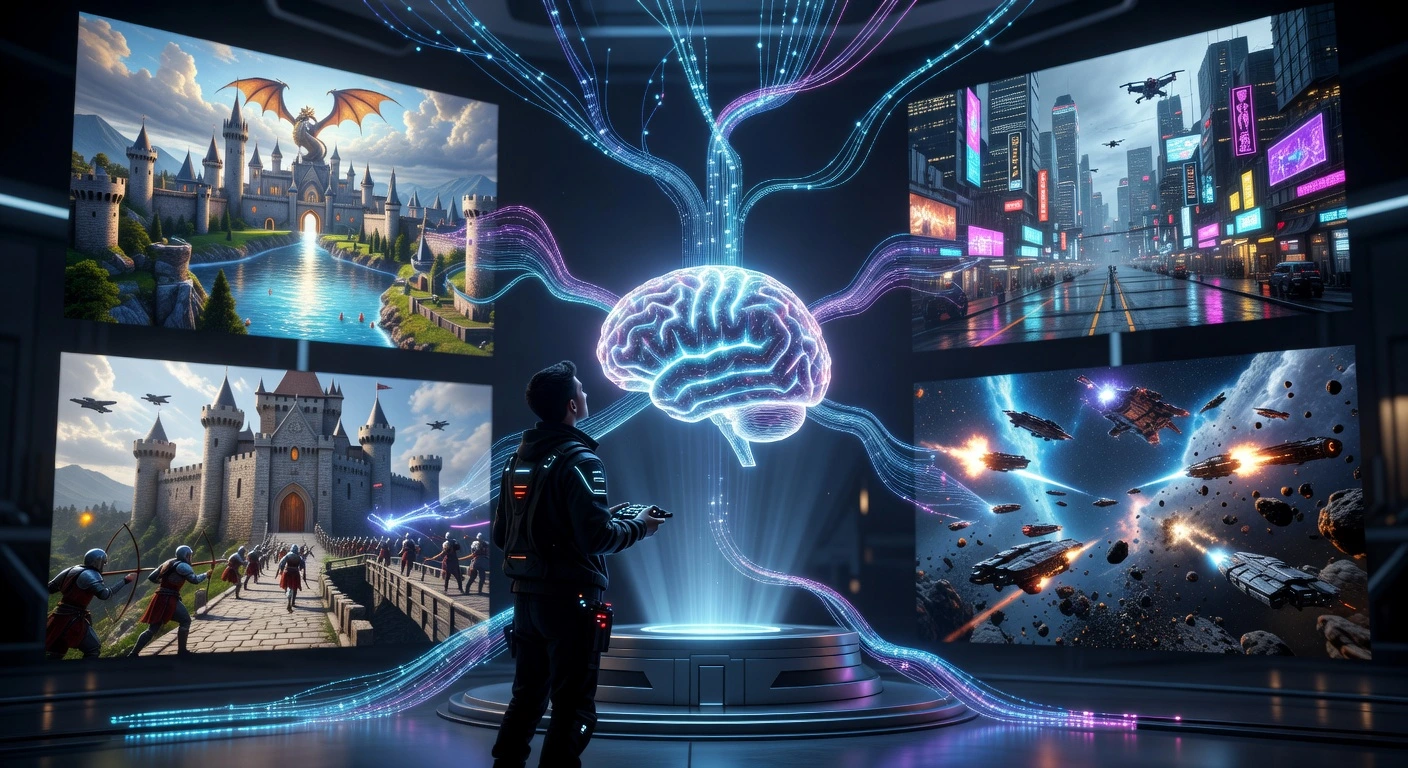
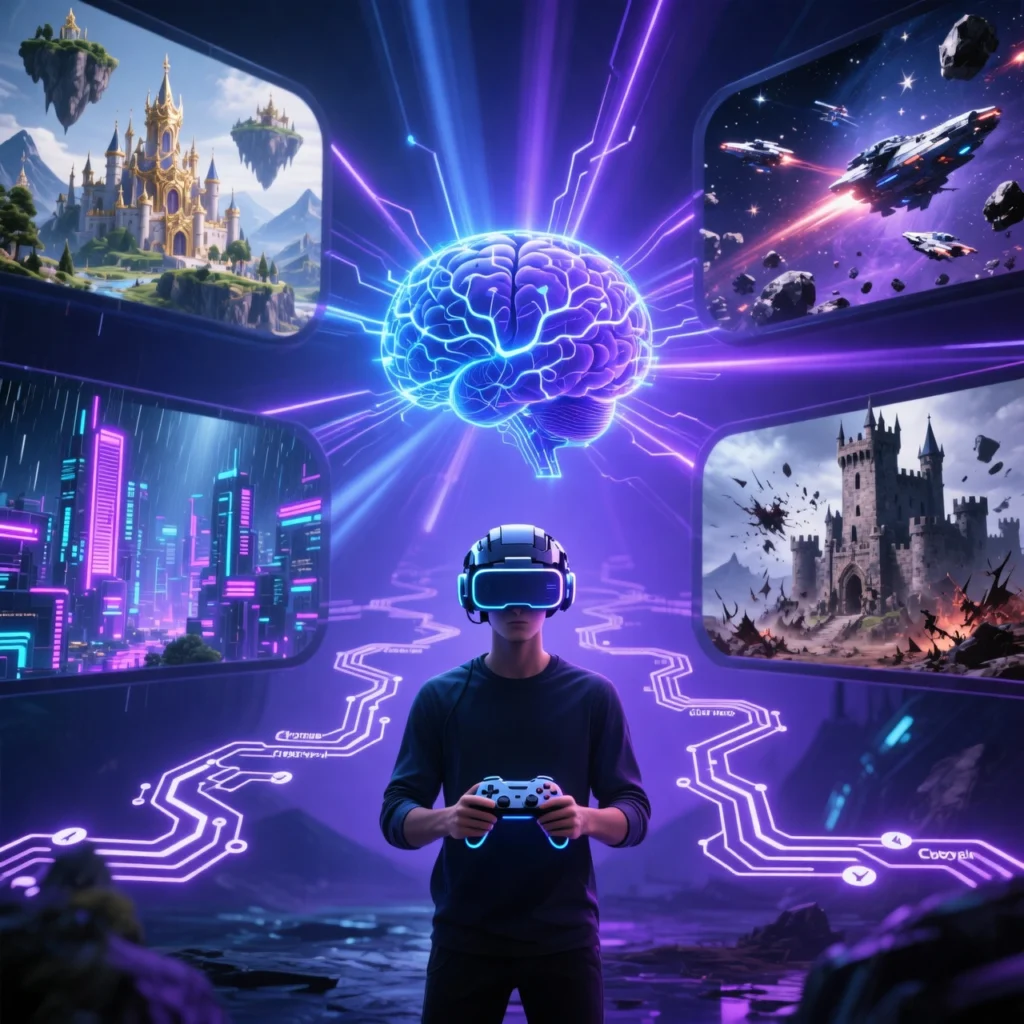
There’s a moment I remember vividly from playtesting a narrative driven game we were developing three years ago. A player made a seemingly insignificant choice she decided to spare an enemy rather than eliminate him. What happened next wasn’t scripted by our writers. The AI narrative system recognized this pattern of mercy and began weaving entirely new story threads we hadn’t explicitly programmed.
That experience changed how I think about game storytelling forever.
The Evolution Beyond Branching Narratives
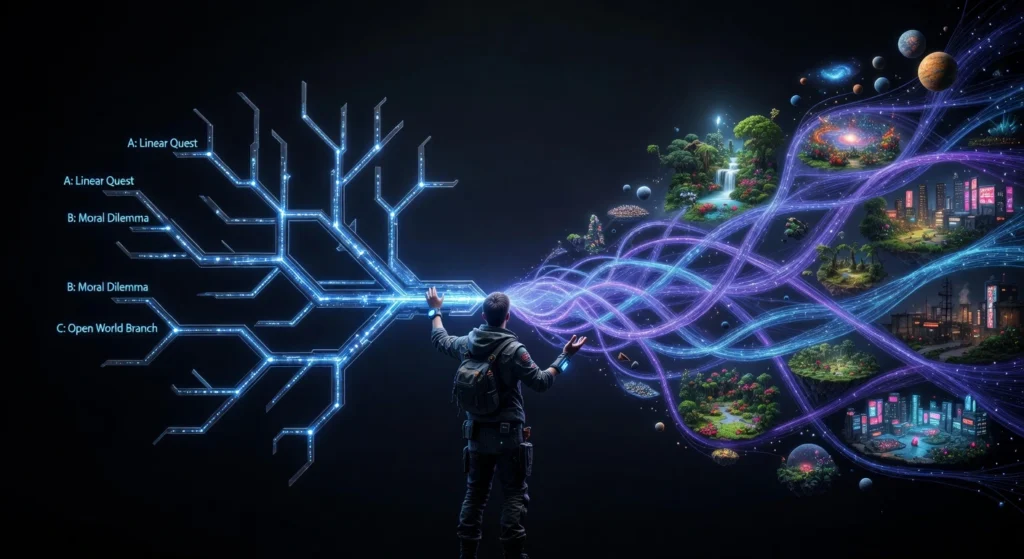
For decades, interactive storytelling meant branching paths. Writers created decision trees if player chooses A, show cutscene B; if player chooses C, trigger ending D. This approach works, but it’s fundamentally limited. Even games celebrated for choice, like Mass Effect or The Witcher series, ultimately funnel players toward predetermined outcomes.
AI driven narrative systems operate differently. They don’t just select from existing options. They generate, adapt, and reshape story elements based on accumulated player behavior, creating experiences that feel genuinely personal.
I’ve spent considerable time studying how these systems function, both through my own work and by analyzing implementations across the industry. What’s emerging isn’t just technological advancement it’s a philosophical shift in how we conceptualize interactive stories.
Understanding the Mechanics
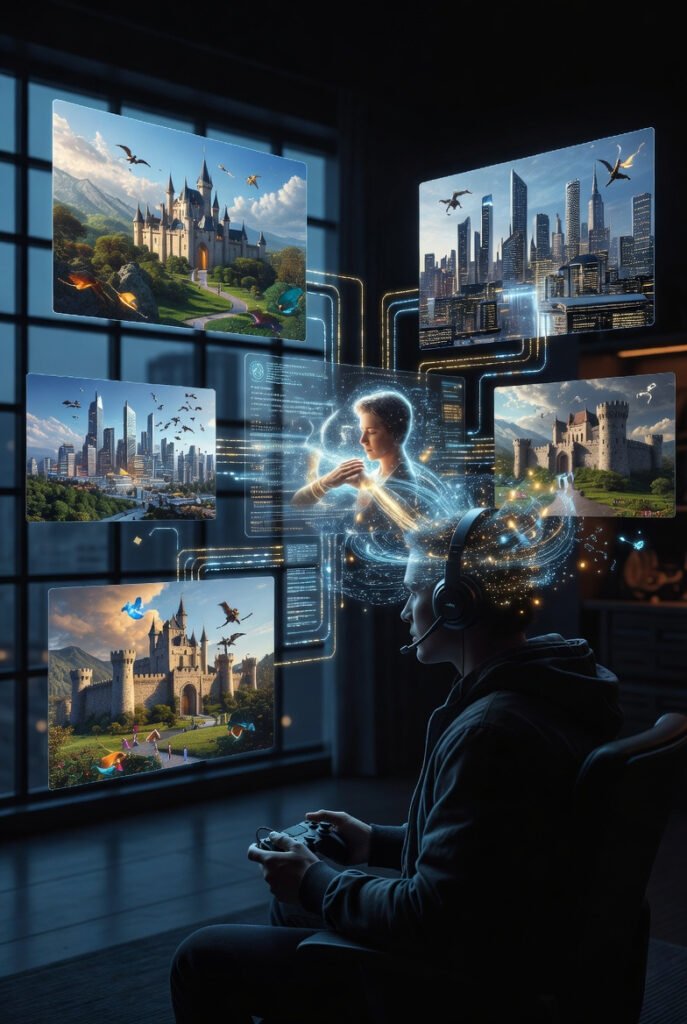
At the technical level, AI narrative systems use several approaches working in concert. Natural language processing allows characters to respond dynamically to player input. Machine learning models track behavioral patterns across entire playthroughs. Procedural generation creates story events that match player preferences and past decisions.
But here’s what the technical descriptions miss: the magic happens in the spaces between systems.
Consider how a sophisticated narrative AI might handle a detective game. Traditional design would script specific clues leading to specific suspects. An AI system instead models relationships between evidence, motives, and character behaviors. The “correct” solution emerges from logical consistency rather than authorial decree. Different players might legitimately reach different conclusions all valid within the story’s internal logic.
I consulted on a project attempting exactly this approach. The challenges were immense, but watching playtesters discover genuinely different murderers based on their investigative approaches was remarkable.
Where This Technology Shines Today
Several games have pushed boundaries in this space, though full AI narrative generation remains emerging technology.
Façade, despite being nearly two decades old, pioneered real time AI drama management. Players interact with a couple experiencing relationship troubles, and the AI director shapes the conversation based on typed inputs. It’s crude by current standards but demonstrated the concept’s viability.
More recently, games like AI Dungeon showed what’s possible with large language models driving narrative. Players describe actions, and the system generates appropriate story responses. The results are inconsistent sometimes brilliant, sometimes absurdly incoherent but the glimpses of potential are undeniable.
Dwarf Fortress, while not traditionally narrative focused, demonstrates emergent storytelling through AI systems. Its simulated world generates stories naturally through character interactions, relationships, and events. Players share tales of fortress collapse and heroic dwarves that emerged entirely from systemic interaction, not scripted content.
The Creative Tension
Here’s something that doesn’t get discussed enough in industry conversations: many writers feel threatened by these developments. I understand the anxiety completely.
Traditional game writing requires enormous craft. Creating memorable characters, meaningful choices, and emotionally resonant moments demands skills honed over years. When someone suggests AI might handle these tasks, it can feel dismissive of that expertise.
But my experience suggests a different reality. AI narrative systems need human creativity more, not less. Someone must define emotional beats the system should hit. Someone must establish character voices, thematic boundaries, and narrative constraints. The AI handles variation and personalization; humans provide soul.
The writers I know who’ve embraced these tools find their work becoming more interesting. Instead of scripting every line, they design systems that generate infinite conversations within defined parameters. It’s a different skill set, but equally creative.
Limitations Worth Acknowledging
I’d be overselling this technology if I didn’t address current constraints honestly.
Coherence remains problematic. AI systems can generate content that’s locally sensible but globally inconsistent. A character might reference events that haven’t happened or contradict established facts. Human oversight remains essential for quality control.
Emotional depth proves challenging too. AI can simulate emotional responses but struggles to create the carefully crafted character development that makes players genuinely care. The technology excels at quantity and variation; mastering quality requires continued advancement.
Resource demands are significant. Running sophisticated narrative AI requires computational power that impacts performance budgets. This limits implementation possibilities, particularly on mobile platforms or older hardware.
Ethical Dimensions
The capacity for AI to shape story outcomes raises questions worth considering.
Player manipulation becomes more sophisticated when systems learn individual psychological profiles. A game could theoretically exploit emotional vulnerabilities or addiction tendencies through personalized narrative hooks. Responsible developers must establish ethical boundaries around these capabilities.
Representation matters too. AI systems trained on existing narrative data may perpetuate stereotypes or exclude perspectives underrepresented in training materials. Conscious effort toward inclusive training and output monitoring is essential.
Authorship questions emerge in interesting ways. When an AI generates a story moment that moves a player to tears, who deserves creative credit? These philosophical puzzles don’t have easy answers but deserve serious consideration.
Looking Toward Tomorrow
The trajectory seems clear. Within five years, I expect AI shaped narratives to become standard in major productions. Not replacing human writers, but working alongside them as collaborative tools.
Imagine RPGs where every player experiences unique character relationships based on their interaction patterns. Imagine mystery games where the solution isn’t fixed but emerges from actual investigation. Imagine stories that remember not just your choices but your playstyle, pacing preferences, and emotional responses.
We’re moving toward games that don’t just react to decisions but understand players as individuals. That’s both exciting and sobering. The stories games tell will become more personal than ever. Whether that represents progress depends largely on how responsibly we wield these capabilities.
After years working in this space, I remain cautiously optimistic. The technology amplifies human creativity rather than replacing it. The stories we’ll tell together human designers and AI systems could achieve something neither manages alone.
Frequently Asked Questions
Can AI completely write a game’s story?
Not yet with quality comparable to human writers. Current AI excels at variation and personalization but struggles with sustained coherence and emotional depth.
Will AI narrative systems replace game writers?
Unlikely. These tools change writer roles rather than eliminating them. Human creativity remains essential for designing systems and ensuring quality.
Which games currently use AI for story outcomes?
AI Dungeon uses language models extensively. Many games use lighter AI elements for dialogue variation and event generation without full narrative control.
Does AI-shaped storytelling require always online connectivity?
Not necessarily. Some systems run locally, though more sophisticated implementations may leverage cloud processing for complex generation.
How do players typically respond to AI generated narratives?
Responses vary. Players appreciate personalization but notice when content feels generic or inconsistent. Quality implementation determines reception.
What’s the biggest challenge in AI narrative development?
Maintaining coherence across extended playtime while preserving meaningful variation remains the core technical challenge most developers face.