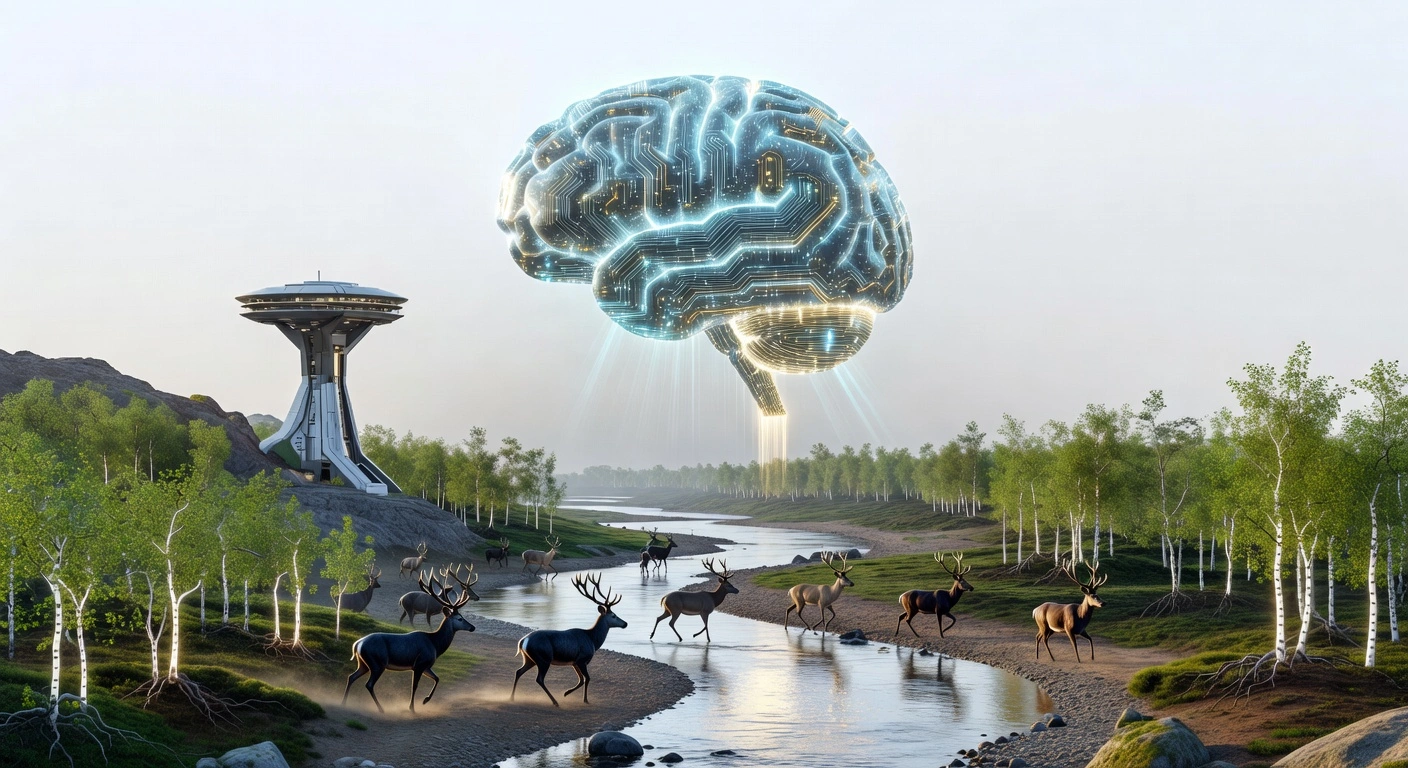
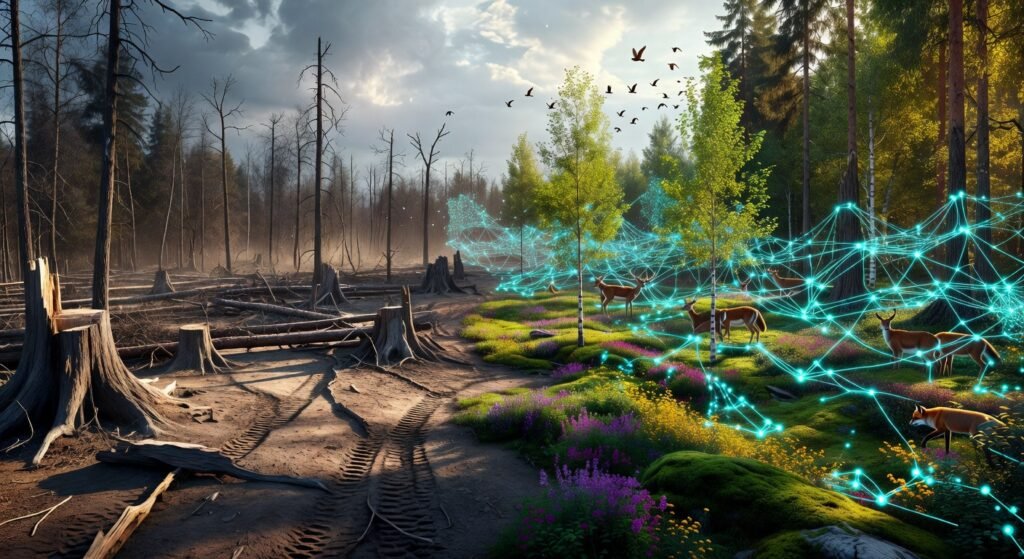
I spent about sixty hours in a survival game last winter. Nothing unusual there. But what struck me was returning to an area I’d heavily logged weeks earlier. The forest had changed. Not through scripted regrowth timers, but in ways that reflected how the broader player community had been interacting with that region. Predator populations had shifted because prey animals migrated away from high traffic zones. New plant species had taken over cleared areas based on soil conditions the game had been silently tracking.
The world had been learning. And honestly, it felt a little eerie.
What Makes a Game World Self Learning?
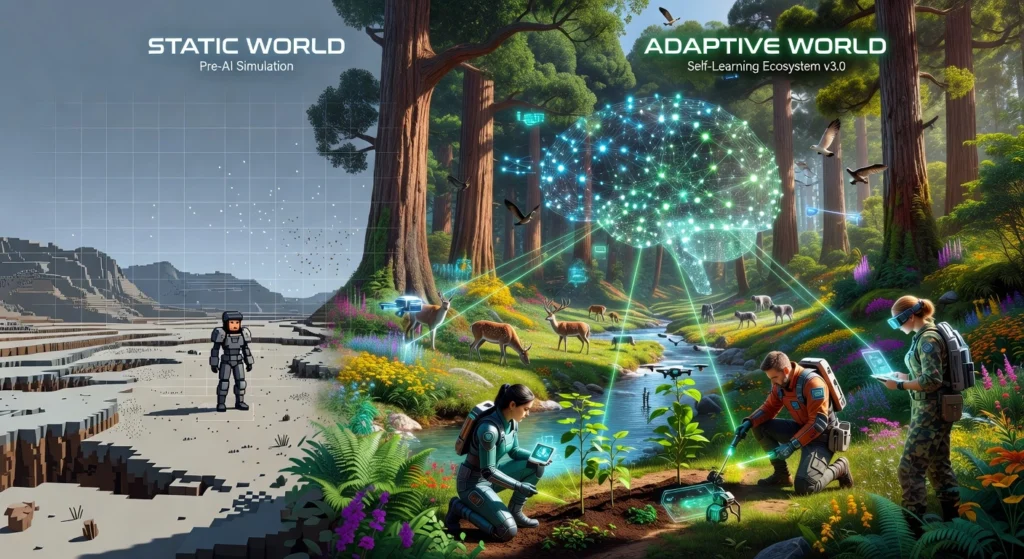
Traditional game environments are essentially static stages. Designers create them, populate them with content, and players experience that fixed creation. Even procedurally generated worlds typically follow predetermined rules they’re randomized but not adaptive.
Self learning game worlds operate differently. These environments observe player behavior, analyze patterns, and modify themselves accordingly. They don’t just react to individual actions. They evolve based on accumulated interactions, developing characteristics that weren’t explicitly programmed.
Think of it like the difference between a theme park and a living ecosystem. Theme parks offer designed experiences. Ecosystems respond, adapt, and change based on the organisms interacting within them. Self learning game worlds aim to become digital ecosystems rather than digital theme parks.
The Technology Behind Adaptive Worlds
Several interconnected systems make self learning environments possible.
Behavioral Analytics
At the foundation, these systems constantly collect data about player actions. Where do players go? What do they ignore? Which resources do they harvest? What enemies do they avoid? This information feeds into machine learning models that identify patterns across thousands or millions of player interactions.
Reinforcement Learning Systems
Many self learning worlds employ reinforcement learning the same approach used to train systems for complex tasks. The environment essentially experiments with modifications, measures player responses, and gradually optimizes toward design goals. If a change increases engagement, the system reinforces that direction. If players respond negatively, it adjusts course.
Emergent Ecosystem Modeling
Some implementations create genuine ecological simulations where species populations, resource availability, and environmental conditions influence each other dynamically. Player actions become just one factor in a complex system of interrelationships. The world doesn’t learn directly from players so much as players become participants in a learning ecosystem.
Neural Network Integration
More sophisticated implementations use neural networks trained on player data to predict preferences and generate content accordingly. These systems can create new quests, adjust difficulty curves, or modify environmental storytelling based on learned understanding of what engages specific player types.
Real World Examples Worth Examining
Several games have pioneered aspects of self learning world design.
No Man’s Sky incorporates systems where planetary ecosystems respond to player presence over time. Heavy resource extraction in an area affects local fauna behavior. The game tracks these interactions across its massive player base, and the universe subtly evolves based on collective activity.
Left 4 Dead introduced the AI Director concept a system that learns player skill levels and emotional states during gameplay, dynamically adjusting zombie spawns, item placement, and pacing. While focused on moment-to-moment adaptation rather than persistent world learning, it demonstrated how games could respond intelligently to player behavior.
Dwarf Fortress creates emergent worlds through complex simulation systems that generate history, cultures, and ecosystems. While not machine learning in the traditional sense, its worlds develop through simulated processes that produce genuinely unpredictable outcomes a form of self organization that approaches learning behavior.
More recently, experimental projects have explored worlds that generate narrative content based on player choices, creating storylines that emerge from learned understanding of what players find meaningful rather than from authored scripts.
The Player Experience Transformation
When worlds genuinely learn and adapt, player experience changes fundamentally.
Exploration becomes genuinely unpredictable. You can’t look up guides for a world that’s unique to your server or your playthrough. Every journey into unknown territory carries real uncertainty because the territory truly is unknown it’s been shaped by forces you can’t fully predict.
Consequence feels weightier. When you know your actions influence how the world evolves not just triggering scripted responses but genuinely shaping future possibilities decisions carry more significance. I’ve watched players agonize over choices in adaptive worlds in ways they never would in static environments.
Communities develop differently too. Players share discoveries that may not replicate elsewhere. Server cultures emerge based on collective decisions that shaped their unique world states. There’s something fascinating about communities formed around genuinely shared experiences in worlds they collectively influenced.
Challenges and Limitations
Let me be honest about the difficulties these systems face.
Computational demands are substantial. Running learning systems alongside gameplay requires significant resources. Most implementations compromise learning happens server side during off peak hours, or adaptation occurs gradually rather than in real-time.
Balance becomes exponentially harder. When worlds evolve unpredictably, ensuring fair, engaging gameplay across all possible states challenges even experienced designers. Some adaptive worlds have developed degenerate states that made them unplayable until manual intervention occurred.
Player expectations create friction. Gamers accustomed to stable, documented worlds sometimes react poorly to environments that shift beneath them. The survival game community still debates whether persistent ecosystem changes enhance or undermine the experience.
There’s also the cold start problem. Self learning systems need data to learn from. New worlds or servers lack the behavioral history necessary for meaningful adaptation. Designers must create compelling initial states that remain engaging while the system accumulates learning data.
Ethical Dimensions
These systems raise questions worth considering. When games learn to optimize for engagement, are they learning to help players or to exploit psychological vulnerabilities? The line between creating compelling experiences and manufacturing compulsion loops isn’t always clear.
Data collection necessary for learning also raises privacy considerations. How much behavioral tracking is acceptable? Who owns the patterns learned from player behavior? These questions remain largely unresolved in the industry.
Where This Leads
The trajectory seems clear enough. As machine learning techniques mature and computational costs decrease, self-learning elements will become standard features rather than experimental novelties. Future players may find static game worlds feel as dated as fixed camera angles or tank controls feel today.
What excites me isn’t just better games though that’s coming. It’s the emergence of genuinely new forms of interactive experience. Worlds that grow, change, and develop in response to human participation offer something qualitatively different from traditional designed entertainment.
We’re still early in understanding what becomes possible when virtual worlds truly learn.
Frequently Asked Questions
What are self learning game worlds?
Game environments that observe player behavior, analyze patterns, and modify themselves based on accumulated interactions rather than following static predetermined designs.
How do these systems learn from players?
Through behavioral analytics, reinforcement learning, and neural networks that identify patterns across player actions and optimize world characteristics accordingly.
Do self learning worlds require internet connection?
Most implementations require server connectivity for data collection and processing, though some limited adaptation can occur locally.
Which games feature self learning world technology?
No Man’s Sky, Left 4 Dead, and various experimental projects incorporate adaptive world systems, with many studios actively developing more sophisticated implementations.
Can players influence how worlds evolve?
Yes, player actions directly influence learning systems, meaning communities collectively shape how their shared worlds develop over time.
Are there downsides to adaptive game worlds?
Challenges include balance difficulties, computational demands, player expectation management, and ethical concerns about engagement optimization and data collection.