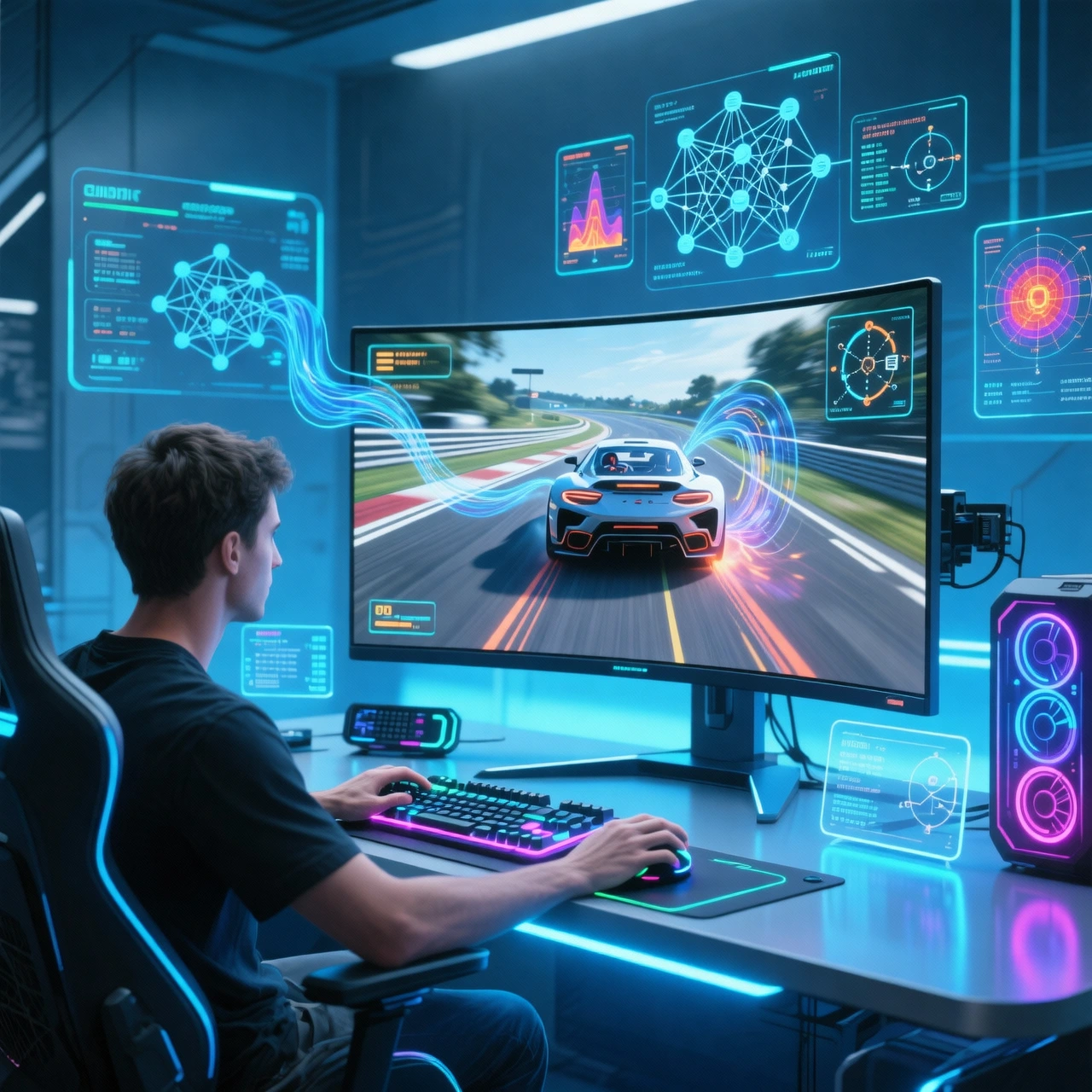
The moment I realized something had changed in gaming came during an extended session of a racing simulator. My usual tactics late braking into corners, aggressive defensive lines stopped working around hour three. The AI opponents I’d been dominating started anticipating my moves. They blocked differently. Took alternative lines. One even used my own overtaking strategy against me.
It wasn’t my imagination. The game featured adaptive AI that learned from player behavior. That experience fundamentally shifted how I think about virtual opponents and what gaming might become when enemies evolve alongside us.
Understanding Self Learning AI Opponents
Traditional game AI operates on fixed rules. Enemies patrol predetermined paths, react with scripted responses, and never truly adapt. You can memorize their patterns. Exploit their limitations. Eventually, challenge evaporates.
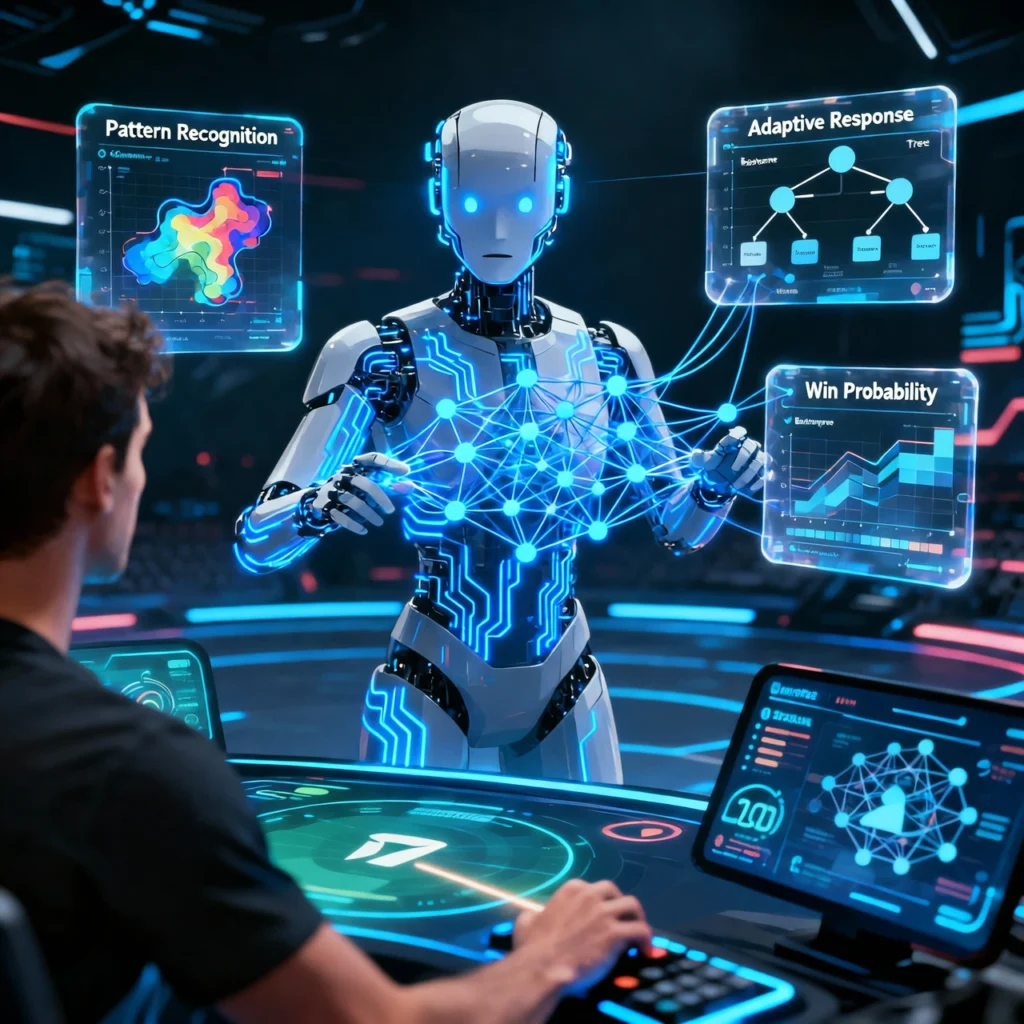
Self-learning AI opponents break this mold entirely. These systems analyze player behavior, identify patterns, and adjust their strategies accordingly. They don’t just follow instructions they develop counter-tactics based on experience.
The technology draws from machine learning principles, particularly reinforcement learning. The AI receives feedback about what works and what doesn’t, then updates its approach. Beat it with a particular strategy repeatedly, and it learns to counter that specific approach.
This creates fundamentally different gaming experiences. The opponent grows as you grow. Mastery requires continuous adaptation rather than pattern memorization.
How These Systems Actually Learn
The mechanics behind self learning opponents vary, but core principles remain consistent.
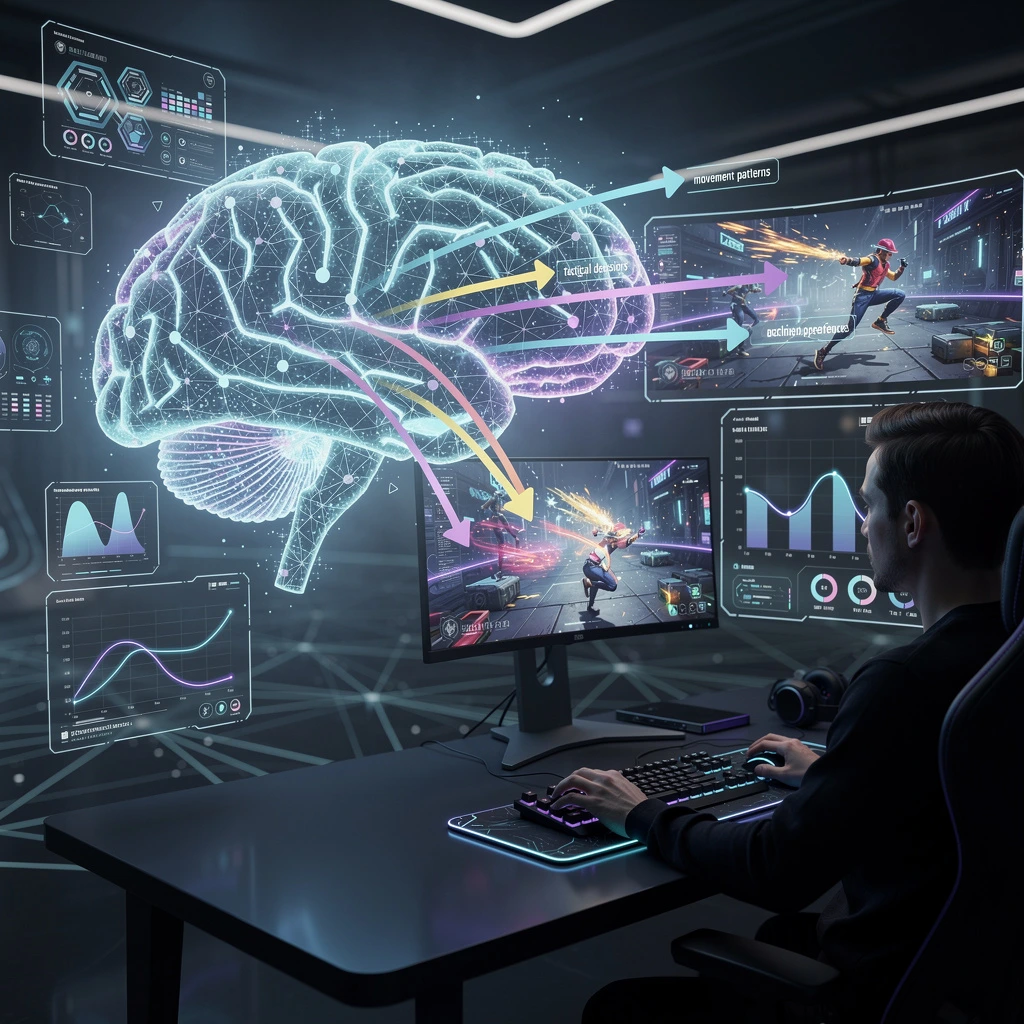
During gameplay, the system observes player actions movement patterns, timing preferences, strategic tendencies. This data feeds into algorithms that identify recurring behaviors. Maybe you always dodge left. Perhaps you favor aggressive openings. The system notices.
Using this information, the AI adjusts its behavioral model. It might start attacking your left side more frequently or preparing defensive counters for early aggression. These adjustments happen gradually, creating opponents that feel increasingly challenging without sudden difficulty spikes.
Some implementations learn only within individual sessions, resetting between plays. Others maintain persistent learning, building increasingly sophisticated player models over extended periods. The approach depends on design goals and desired experience.
Neural networks often power these systems, processing complex behavioral data and outputting tactical adjustments. The network weights shift based on outcomes, gradually optimizing responses to specific player tendencies.
Real World Examples Worth Exploring
Several games have implemented self-learning opponents with varying degrees of sophistication.
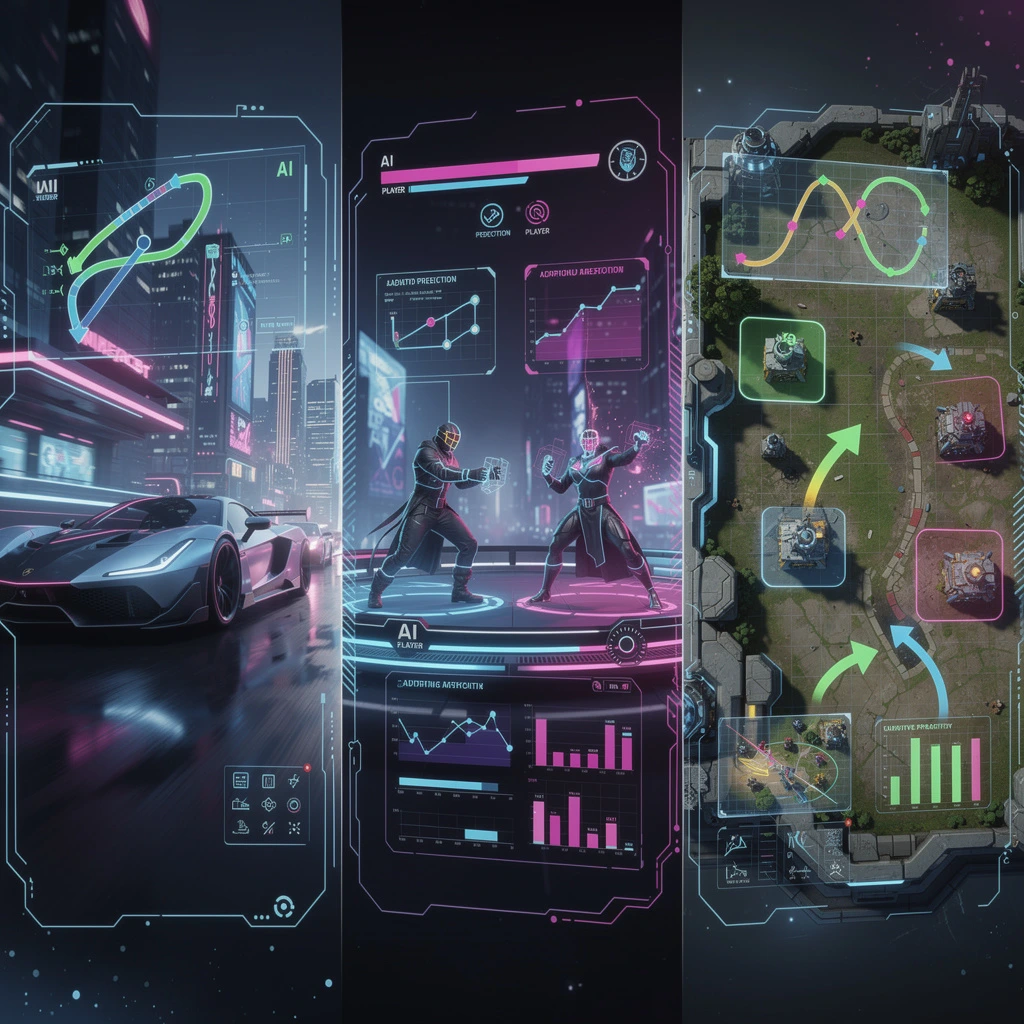
Fighting games pioneered accessible adaptive AI. Titles like Killer Instinct featured “Shadow” systems where AI opponents trained specifically on individual player recordings. Fighting your shadow meant confronting an opponent that moved like you, attacked like you, and knew your tendencies intimately.
Racing games adopted similar approaches. Forza Motorsport’s Drivatar system learns from player driving styles, creating AI opponents that behave like real human drivers. Your friends’ Drivatars might appear in your races, exhibiting their actual driving tendencies rather than generic AI patterns.
Strategy games present more complex challenges for self learning AI. Games like StarCraft II have seen experimental implementations where AI opponents analyze build orders, unit compositions, and strategic timing to develop counters specific to individual players.
Even sports games incorporate learning elements. FIFA and Madden titles have experimented with AI that recognizes player tendencies favorite plays, scoring patterns, defensive preferences and adjusts accordingly.
The Player Experience Transformation
What does playing against learning opponents actually feel like?
Initially, the experience can feel disorienting. Strategies that worked previously stop producing results. Opponents seem unpredictable in ways scripted AI never does. There’s genuine uncertainty about what the enemy might do.
This unpredictability generates tension that static AI cannot match. Each encounter carries stakes because you can’t rely on memorized solutions. The opponent might have adapted since your last meeting.
For competitive players, self learning opponents offer training partners that grow alongside their skills. Instead of outgrowing AI difficulty, the challenge scales naturally. This extends single-player longevity dramatically.
Casual players sometimes find adaptive AI frustrating. If the system learns too aggressively, difficulty escalates beyond comfortable levels. Good implementations balance learning speed against player enjoyment, ensuring challenge without discouragement.
Technical and Design Challenges
Building effective self learning opponents presents substantial difficulties that explain why adoption remains limited.
Learning rate calibration proves critical. Learn too quickly, and players feel the AI cheats. Learn too slowly, and adaptation seems meaningless. Finding appropriate pacing requires extensive testing and refinement.
Distinguishing meaningful patterns from noise challenges these systems. Players behave inconsistently. A particular action might reflect deliberate strategy or momentary error. The AI must identify genuine tendencies without overreacting to random variations.
Computational requirements add constraints. Learning algorithms demand processing resources. Developers must balance AI sophistication against performance requirements, especially on hardware-limited platforms.
Player data persistence raises design questions. Should learning carry between sessions? Across different players? Reset periodically? Each choice shapes the experience differently, and optimal approaches vary by game type.
Ethical Dimensions Worth Considering
Self learning AI opponents introduce considerations that static AI avoids.
Difficulty manipulation concerns some players. If the AI learns to counter your best strategies, are you being punished for skill? The line between adaptive challenge and frustrating rubber-banding requires careful navigation.
Data collection accompanies learning systems. Recording player behavior enables adaptation but raises privacy questions. What data gets stored? For how long? These questions demand transparent answers.
Competitive integrity matters in certain contexts. If AI opponents adapt to individual players, different players face different challenges. This complicates comparisons and leaderboard validity. Some games separate adaptive AI from scored modes for this reason.
Psychological impacts deserve attention too. Opponents that specifically counter your preferences might create frustration patterns that affect player wellbeing. Responsible implementation considers emotional experiences alongside technical functionality.
Where This Technology Is Heading
The future promises more sophisticated and pervasive self-learning opponents.
Improved machine learning techniques enable faster, more accurate player modeling. Systems will identify tendencies more quickly while requiring less data, making adaptation feel more seamless.
Cross game learning might eventually allow opponents that understand your preferences across multiple titles. Your general gaming tendencies could inform opponent behavior in new games you purchase.
Cooperative applications extend beyond opponents. Teammates might adapt to complement your playstyle, filling gaps in your capabilities and enhancing collaborative experiences.
The ultimate vision involves opponents indistinguishable from human players in their adaptability and creativity. Whether this enhances or diminishes gaming appeal remains debatable, but the technical trajectory points clearly toward increasingly sophisticated virtual adversaries.
For now, self learning AI opponents represent gaming’s frontier—challenging, sometimes frustrating, but undeniably fascinating.
Frequently Asked Questions
What makes self learning AI different from difficulty settings?
Difficulty settings adjust predetermined parameters like damage or speed. Self-learning AI changes behavior based on your specific actions and strategies, creating personalized challenge.
Do self learning opponents remember between gaming sessions?
Implementation varies. Some systems reset each session while others maintain persistent learning. Check specific game documentation for details.
Can self learning AI become too difficult?
Poorly calibrated systems might escalate beyond enjoyable challenge. Well-designed implementations include safeguards preventing excessive difficulty spikes.
Which games currently feature self-learning opponents?
Notable examples include Forza Motorsport’s Drivatar system, Killer Instinct’s Shadow Lab, and various experimental implementations in strategy and sports titles.
Does self learning AI affect game performance?
Learning algorithms require processing power. Most implementations optimize carefully to minimize performance impact, though complex systems may affect older hardware.