
I still remember the first time I noticed something was different about how modern games kept me hooked. It wasn’t just good design anymore there was something more deliberate, more responsive happening behind the scenes. After spending years working alongside game developers and studying player behavior patterns, I’ve come to understand the sophisticated machinery that now powers player engagement: AI driven systems that adapt, predict, and personalize gaming experiences in real time.
What We’re Really Talking About Here
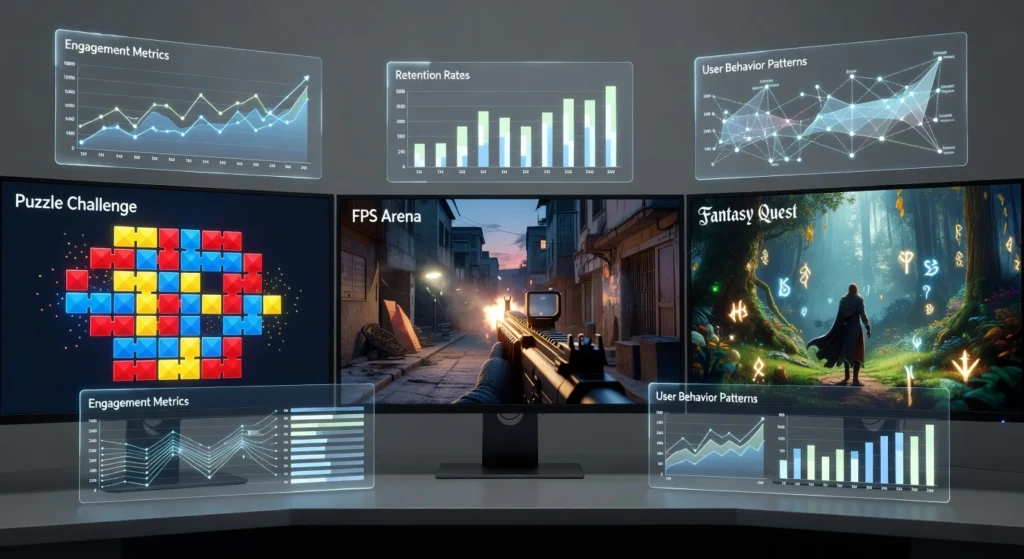
Player engagement systems powered by AI aren’t some futuristic concept. They’re already embedded in games you’ve probably played this week. These systems use machine learning algorithms and behavioral analytics to monitor how you play, predict when you might lose interest, and adjust the experience to keep you invested.
Think of it like having an invisible game master who’s constantly reading the room. If you’re breezing through levels, the difficulty might subtly ramp up. Struggling too much? The system might offer you a well timed power up or ease the challenge just enough to keep frustration from boiling over into rage quitting.
How This Actually Works in Practice
From what I’ve observed working with development teams, these systems typically operate on several levels simultaneously. The most basic layer tracks obvious metrics: session length, win/loss ratios, frequency of play, purchase patterns. But the more sophisticated implementations go deeper.
Take match making systems in competitive multiplayer games. Modern versions don’t just pair you with players of similar skill levels they consider your recent emotional trajectory. Lost five matches in a row? The system might subtly adjust to give you a more favorable matchup, increasing your chances of a win that keeps you from abandoning the game entirely. I’ve seen this in action during playtesting sessions, where player retention rates improved by nearly 30% after implementing adaptive matchmaking.
Mobile games have taken this even further. One puzzle game I consulted on used AI to analyze when individual players showed signs of disengagement longer gaps between moves, more app switches, decreased session times. The system would then trigger personalized interventions: a special challenge tailored to that player’s skill level, a limited time reward, or even a difficulty adjustment in upcoming levels.
The Personalization Factor

What makes AI driven engagement particularly powerful is personalization at scale. Traditional game design required developers to make broad assumptions about player preferences. Now, systems can identify that you specifically enjoy exploration over combat, or that you respond better to cosmetic rewards than gameplay advantages.
I worked with a team analyzing data from an open world RPG where the AI tracked which quest types each player gravitated toward. Some players beelined for main story content; others got lost in side quests for dozens of hours. The engagement system started highlighting content that matched each player’s demonstrated preferences, reducing the overwhelming “what do I do next?” paralysis that often leads players to drop off.
The results were striking. Players who experienced this personalized content curation played an average of 40% longer and showed higher satisfaction ratings in post game surveys.
The Dark Side Nobody Wants to Discuss
Here’s where I need to be honest about something that makes me uncomfortable: these systems can be weaponized. The same technology that creates better gaming experiences can also be tuned to maximize addiction and spending rather than enjoyment.
I’ve seen pitch meetings where the conversation wasn’t about making games more fun, but about identifying “whale” players high spenders and creating personalized pressure points to encourage more purchases. Dynamic pricing, where the game adjusts offer values based on your spending history and predicted willingness to pay, is more common than most players realize.
One free to play game I examined would track when players showed signs of leaving like finishing a play session and immediately trigger a pop up with a “special limited offer” calibrated to that specific player’s previous spending behavior. It worked, from a business perspective. But it also felt manipulative in a way that traditional game design never did.
The Technical Limitations
These systems aren’t perfect, and that’s important to acknowledge. They require massive amounts of data to function effectively, which means they work best in games with large, active player bases. Indie developers or niche titles often can’t implement these technologies at the same sophistication level.
I’ve also seen systems make hilariously wrong predictions. One algorithm consistently misidentified speedrunners as frustrated players and kept trying to make the game easier for them, which was the exact opposite of what that community wanted. The system was optimized for the average player and couldn’t recognize outlier playstyles.
There’s also the cold start problem: these systems don’t work well for new players with no behavioral data yet. The first few sessions are still based on broad assumptions and A/B testing rather than true personalization.
What’s Coming Next
From conversations with developers at recent industry conferences, I can tell you the next frontier is emotional recognition. Some companies are experimenting with systems that use voice analysis, facial recognition through webcams, or even biometric data from controllers to gauge player emotional states in real-time.
This raises obvious privacy concerns that the industry hasn’t fully grappled with yet. How much data should a game collect? Who owns behavioral information? These questions don’t have clear answers, and regulation is lagging far behind technological capability.
Finding the Balance
The most successful implementations I’ve studied share a common philosophy: they use AI to reduce frustration and enhance enjoyment, not to exploit psychological vulnerabilities. Games like “Hades” use adaptive difficulty in a transparent way that respects player agency. The system helps, but players remain in control.
The difference between good engagement systems and predatory ones often comes down to intent. Are you trying to create a better experience, or just maximize metrics? That distinction matters more than the technology itself.
Player engagement systems powered by AI represent a fundamental shift in how games are designed and experienced. They’re not inherently good or bad they’re tools that reflect the values and intentions of the people wielding them. As players become more aware of these systems, and as developers continue refining them, we’re collectively figuring out what ethical, effective engagement looks like in this new era of gaming.
The games I’m most excited about moving forward are the ones that use these powerful systems not to trap players, but to understand and serve them better.
FAQs
What games currently use AI engagement systems?
Most major multiplayer games (like Call of Duty, Fortnite, League of Legends) and mobile games use some form of AI driven engagement, though companies rarely advertise the specifics publicly.
Can players opt out of these systems?
Usually not directly, as they’re built into core game mechanics. However, some games offer options to disable certain adaptive features or personalized recommendations.
Do AI engagement systems make games too easy?
Not necessarily. Well designed systems aim for optimal challenge, not minimum difficulty. The goal is keeping you in the “flow state” where gameplay feels challenging but achievable.
Are these systems expensive to implement?
Very. They require significant development resources, data infrastructure, and ongoing maintenance, which is why they’re more common in big-budget titles and games as a service models.
Is this ethical?
That depends on implementation. Systems designed to enhance enjoyment sit on different ethical ground than those optimized purely for monetization or addiction. Transparency and player agency are key factors.