When I first noticed ray tracing making waves in gaming a few years back, I thought we’d reached the peak of realistic lighting. Then I started digging into what developers were doing with AI powered lighting systems, and honestly, it’s become clear we’re just scratching the surface of what’s possible.
The intersection of artificial intelligence and lighting technology in games isn’t just about prettier graphics though that’s certainly part of it. It’s fundamentally changing how game environments respond to player actions, how developers optimize performance, and even how quickly studios can build believable worlds.
What Actually Makes Lighting “AI Powered”?
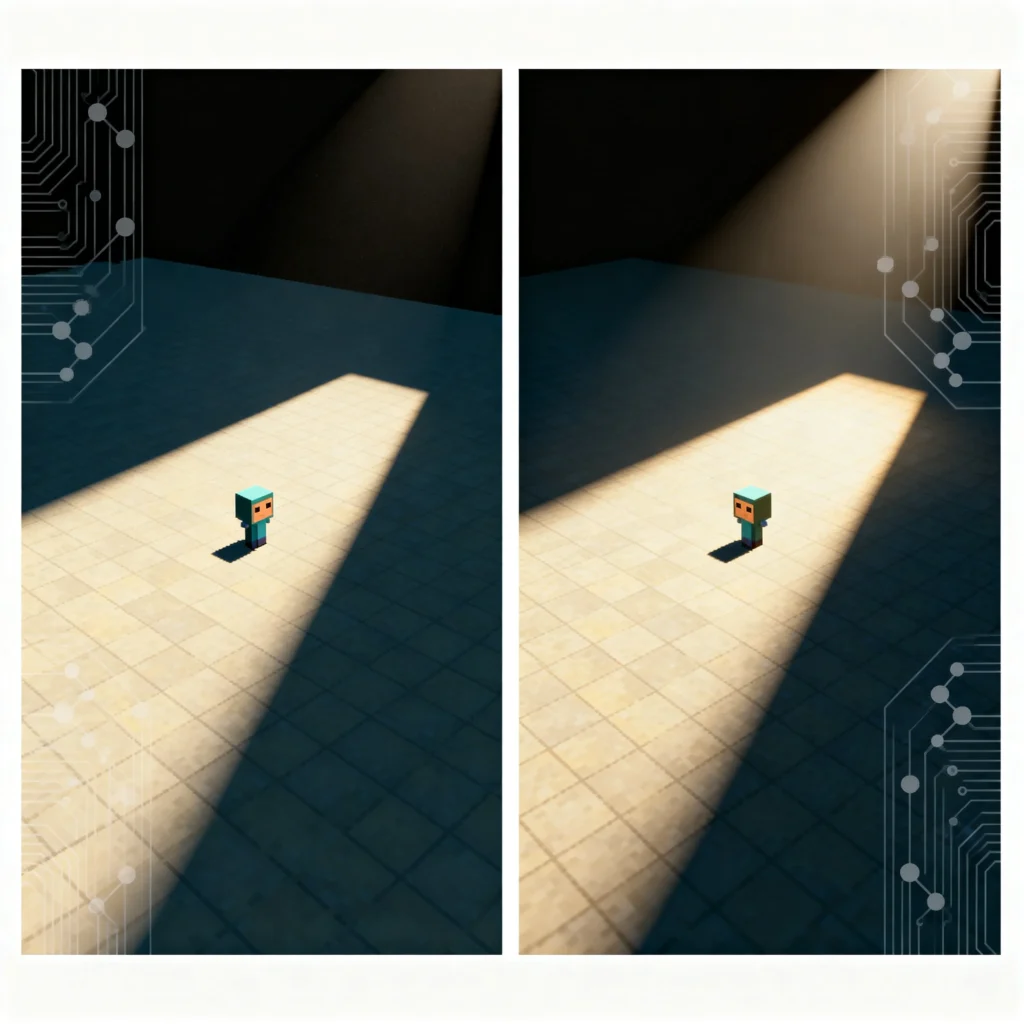
Traditional game lighting works through pre calculated light maps or real time rendering techniques that follow fixed mathematical rules. You place a light source, the engine calculates how it bounces around the scene, and that’s what you get. AI lighting systems flip this approach by using machine learning models to predict, enhance, or even generate lighting behavior.
I’ve seen this work in a few different ways. Some systems use neural networks trained on thousands of real world lighting scenarios to approximate how light should behave in a scene. Others employ AI to denoise ray traced images in real time, letting games achieve ray traced quality at a fraction of the computational cost. NVIDIA’s DLSS (Deep Learning Super Sampling) is probably the most widely recognized example, though it does more than just lighting.
The real breakthrough comes from temporal data the AI doesn’t just look at a single frame. It analyzes multiple frames, learning patterns and filling in gaps intelligently. This is why modern AI enhanced lighting often looks better in motion than in static screenshots.
Real World Performance Gains I’ve Observed
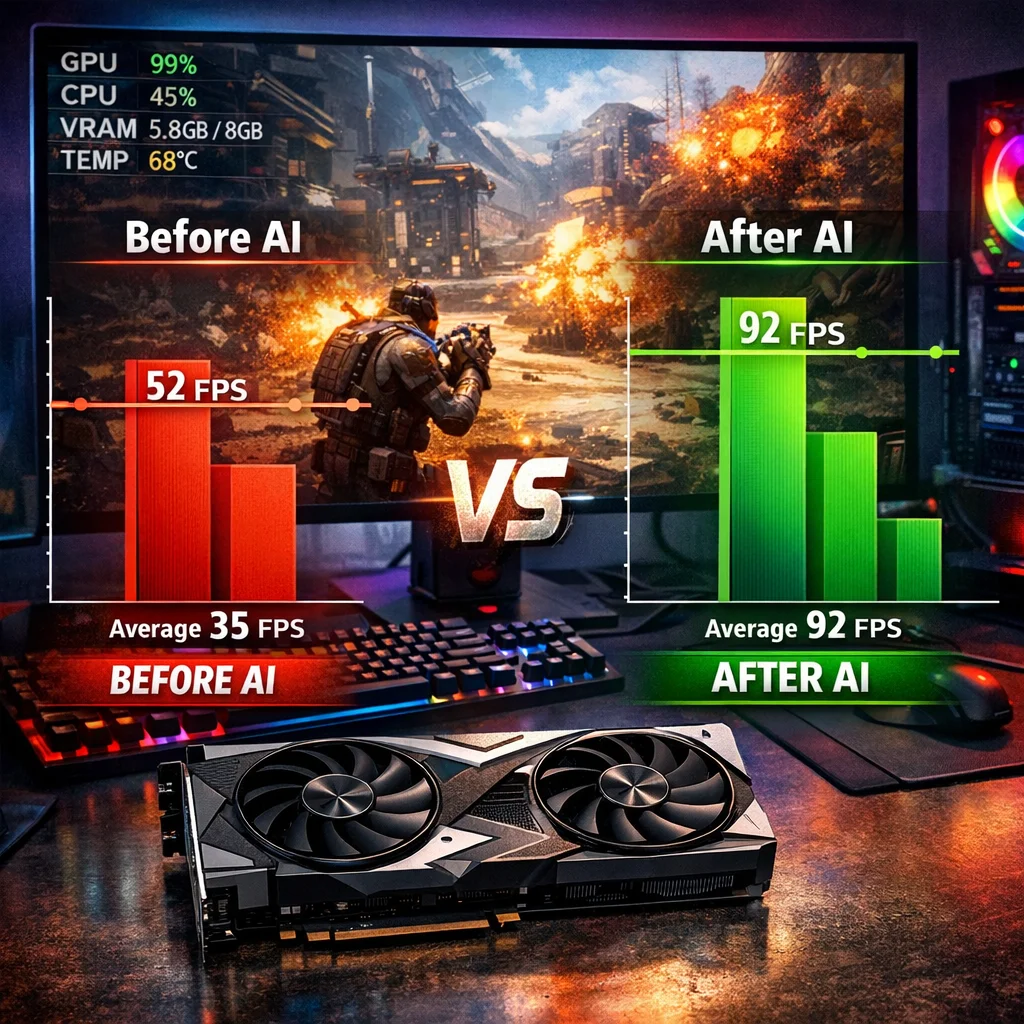
Here’s where things get practical. Ray tracing without AI assistance is brutally demanding on hardware. When Cyberpunk 2077 launched with full ray tracing enabled, even high-end graphics cards struggled to maintain 60 frames per second at 1080p. Once you enable DLSS or similar AI upscaling and denoising, suddenly you’re getting playable frame rates at 4K with ray tracing on.
Metro Exodus Enhanced Edition provided one of my favorite case studies. The developers went all in on ray tracing, removing traditional rasterized lighting entirely. But they made it work on mid-range hardware by leaning heavily on AI denoising. The result? Lighting that reacts convincingly to time of day changes, dynamic weather, and destructible environments all running smoothly on cards that would’ve choked on pure ray tracing.
The performance multiplier is genuinely remarkable. A well trained AI denoiser can produce clean images from extremely noisy ray traced input sometimes using just one ray sample per pixel instead of dozens. That’s potentially a 10x to 20x performance improvement.
Beyond Denoising: Generative Lighting
What really gets me excited is where this technology is heading. Some newer implementations use AI not just to clean up existing lighting but to intelligently fill in missing data or even generate plausible lighting for areas the renderer hasn’t fully calculated.
Unreal Engine 5’s Lumen system, while not purely AI based, incorporates machine learning elements for global illumination. It makes intelligent guesses about indirect lighting by analyzing scene geometry and material properties. The system learns which shortcuts it can take without producing noticeable artifacts.
I’ve also been following developments in neural radiance fields (NeRFs) adapted for gaming. These systems can potentially recreate complex lighting environments from limited input data. Imagine scanning a real location with photographs, then having AI generate a fully interactive, correctly lit game environment. We’re not quite there for real-time gaming, but the technology is advancing fast.
The Developer Perspective: Faster Workflows
From a development standpoint, AI lighting tools are becoming genuine time-savers. Traditional lighting in games requires artists to manually place lights, bake lightmaps, and iterate endlessly to get things looking right. One change to level geometry? You might be rebaking lighting for hours.
Some modern tools use AI to suggest optimal light placement based on the mood and time of day you’re targeting. Others can automatically generate convincing lighting setups for entire scenes, which artists can then refine. This doesn’t replace skilled lighting artists it frees them up to focus on creative decisions rather than technical grunt work.
I spoke with a friend working at an indie studio last year, and he mentioned their team started using AI-assisted lighting tools midway through production. What used to take two lighting artists several weeks per level now takes a few days. That’s the kind of efficiency gain that can make or break a small studio’s budget.
Limitations and Trade offs Worth Knowing
Let’s be realistic though this technology isn’t magic, and it comes with baggage. AI lighting systems require significant VRAM and compatible hardware. If you’re gaming on a five year old GPU, you’re probably not getting these benefits. This creates a bit of a divide in the gaming community between those experiencing cutting edge visuals and those stuck with traditional rendering.
There’s also the black box problem. When AI makes decisions about lighting, it’s not always clear why it chose a particular approach. Sometimes this produces artifacts weird shimmering effects, temporal instability, or incorrect shadow behavior. These issues are becoming rarer, but they haven’t disappeared entirely.
Training these AI models requires enormous datasets and computing power, raising questions about the environmental cost. The energy used to train a large neural network can be substantial. Responsible developers are considering this, but it’s a legitimate concern.
What I’m Watching For
The next frontier seems to be fully dynamic, AI driven lighting that adapts not just to scene geometry but to gameplay context. Imagine lighting that automatically shifts to highlight important objects, or that subtly adjusts mood based on in-game tension levels all handled intelligently by AI rather than through scripted events.
We’re also seeing experiments with AI that learns individual players’ preferences. Some players prefer high contrast and dramatic shadows; others want brighter, more even lighting. Systems that adapt to these preferences without manual adjustment could be coming sooner than you think.
The convergence of AI lighting with procedural generation is another area worth monitoring. Games that can generate vast, uniquely lit worlds on the fly would open new possibilities for exploration-focused titles.
Final Thoughts
AI lighting systems represent a genuine evolution in how games look and perform, not just marketing hype. They’re solving real technical problems making advanced lighting techniques accessible on consumer hardware, speeding up development, and enabling visual fidelity that simply wasn’t possible before.
That said, they’re tools, not miracles. Great lighting still requires artistic vision and technical expertise. AI just makes achieving that vision more practical. As someone who remembers when dynamic shadows were considered cutting-edge, watching this technology mature has been genuinely thrilling.
FAQs
Do I need special hardware for AI lighting in games?
Yes, most AI lighting features require modern GPUs with dedicated tensor cores (NVIDIA RTX series or AMD RDNA 2/3). Some features work on older cards but with reduced effectiveness.
Does AI lighting work in all games?
No, developers must specifically implement these systems. It’s becoming more common in AAA titles and games using modern engines like Unreal Engine 5 or Unity with ray tracing support.
Is AI lighting better than traditional ray tracing?
AI typically enhances ray tracing rather than replacing it. Pure ray tracing is more accurate but slower; AI helps make it practical for real-time gaming.
Can AI lighting run on consoles?
Yes, PlayStation 5 and Xbox Series X/S support various AI enhanced lighting techniques, though implementations may differ from PC versions.
Does AI lighting affect gameplay or just visuals?
Primarily visuals, but better lighting can impact gameplay by improving visibility, atmosphere, and environmental storytelling. Performance gains also enable smoother gameplay overall.